

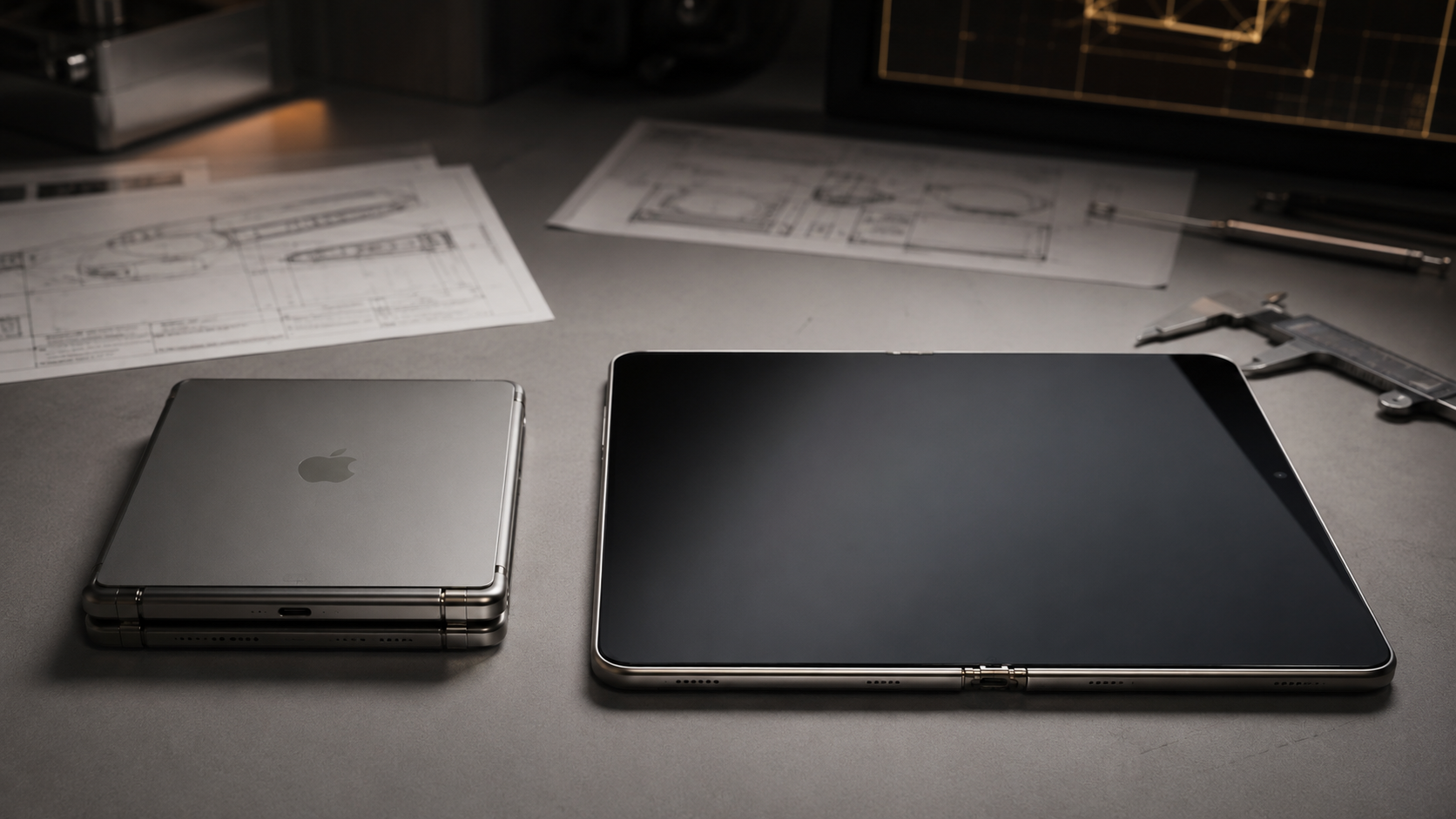
For nearly a decade, the tech industry has played a cyclical game of telephone with the phrase "Foldable iPhone." Every single year since 2017, a fresh batch of supply chain rumors hits the internet, promises a revolutionary folding device, and then quietly moves the goalposts out another twelve months. It became the ultimate vaporware joke.
But as we pass the midway point of 2026, something has fundamentally shifted in Cupertino’s supply chain. The fuzzy, speculative smoke is clearing, replaced by hard, cold manufacturing data. Apple isn't just experimenting anymore; they are locked into an aggressive, high-stakes sprint.
Let's cut through the standard fanboy hype and PR spin. The device tentatively dubbed the iPhone Ultra (or iPhone Fold) is targeted for a fall 2026 unveiling alongside the standard iPhone 18 Pro lineup. However, as someone who tracks these developments with a healthy dose of skepticism, I can tell you that Apple is currently walking a tightrope between a historic product launch and a logistical nightmare.
From massive manufacturing bottlenecks to eye-watering price points, here is my raw, unfiltered take on what Apple’s first foldable looks like, the verified leaks coming out of Asia, and whether this device will actually change how we use smartphones.
The Form Factor: Why Apple Is Choosing the "Book" Over the "Flip"
For a long time, the rumor mill was split. Would Apple build a chic, clamshell pocket device resembling the Samsung Galaxy Z Flip, or a massive, productivity-first book-style canvas like the Pixel Fold?
The latest supply chain consensus from May 2026 confirms that Apple has prioritized the large, book-style form factor for its premier debut. Why? Because a clamshell phone is a lifestyle statement; a book-style device is a computing paradigm shift. Apple wants this phone to bridge the gap between iOS and iPadOS, effectively creating a completely new product category.
According to leaked CAD drawings leaked in Europe, the iPhone Ultra is taking a radically different design path than its competitors. It will be shorter and wider than Samsung's current form factor, closely resembling the proportions of a passport when closed. This gives it a highly usable 5.5-inch outer cover screen. But the real magic happens when you open it: a massive 7.8-inch internal display that boasts almost the exact square aspect ratio of an iPad mini.
My take? This is a genius ergonomic move. Current Android foldables often feel like awkward, narrow remote controls when closed. Apple is ensuring that the cover screen behaves like a normal, comfortable iPhone before you ever expose the flexible interior.
The Technical Specs We Know So Far
Apple is building this device to be an absolute powerhouse flagship, not an experimental gimmick. They are cramming their most advanced, next-generation silicon and battery tech into a chassis that is absurdly thin.
Leaked Specifications Table
| Feature / Hardware | Expected Specification (2026 Supply Chain Leaks) |
| Internal Display | 7.8-inch flexible OLED, 2713 x 1920 resolution, 460 ppi |
| External Cover Display | 5.5-inch LTPO Plus OLED |
| Processor Node | A20 Pro (TSMC 2nm cutting-edge architecture) |
| RAM Configuration | 12GB RAM (Using WMCM wafer-stacked packaging) |
| Storage Options | 256GB / 512GB / 1TB / 2TB |
| Main Camera System | Dual-camera or triple stacked setup featuring a 200MP main sensor |
| Biometrics | Touch ID integrated into the power button (No Face ID) |
| Unfolded Thickness | A mere 4.5mm to 5.6mm |
| Folded Thickness | Approximately 9mm to 11mm |
| Battery Architecture | Dual split-cell design totaling roughly 4,700 to 5,600 mAh |
The Supply Chain Drama: Snags, Yields, and Delays
Let’s talk about the friction, because this is where the human reality of manufacturing clashes with corporate optimism. While prominent analysts like Mark Gurman still maintain that the iPhone Ultra is on track for a September 2026 announcement, reports out of Weibo from prominent supply chain insiders reveal that the factory floors are in a state of high tension.
Apple is currently running into massive mass production yield issues at the pre-assembly stage. Interestingly, the problem isn’t the durability of the custom hinge mechanism which reportedly passed high-frequency stress tests earlier this spring. Instead, the bottleneck lies entirely within the Surface-Mount Technology (SMT). Engineers are struggling to reliably place microscopic electrical components onto the ultra-thin, flexible circuit boards required to make the phone fold flat.
Because of these pre-assembly failures, mass production has allegedly slid from June to August 2026. This creates a razor-thin margin for error. What does this mean for you, the consumer?
Even if Apple announces the iPhone Ultra on stage in September, do not expect to walk into an Apple Store and buy one easily. We are looking at an incredibly constrained, staggered rollout. It is highly likely that pre-orders will slip into November or December 2026 instantly, mimicking the chaotic launch window we saw with the Apple Vision Pro.
Erasing the Crease: Apple’s Two Biggest Display Innovations
If there is one thing Apple absolutely hates, it is compromising on visual aesthetics. They refused to release a foldable until they could solve the single biggest eye-sore plaguing Android foldables: the ugly, plasticky center crease.
To achieve a completely flat, seamless canvas, Apple has signed a massive, exclusive three-year contract with Samsung Display, but they are forcing Samsung to build panels to entirely unique tolerances. The iPhone Ultra will feature two crucial display breakthroughs:
- The Hybrid Glass Sandwich: Instead of using standard plastic-heavy PET films like most manufacturers, Apple is implementing a dual-layer UTG/UFG (Ultra-Thin Glass / Ultra-Thin Flexible Glass) structure. The actual display elements are cushioned safely between two microscopic layers of flexible glass, giving the screen a rigid, premium, glass-like texture under the finger instead of a mushy plastic feel.
- Optically Clear Adhesive (OCA) Cushion: Traditional foldables use firm adhesive sheets to lock display layers together. Apple is introducing a modified, highly flexible OCA that acts like a microscopic fluid gel cushion. When the phone closes, this adhesive shifts slightly to evenly distribute mechanical stress across the bend, preventing the display from warping or creasing over prolonged use.
Furthermore, rumors indicate that Apple is heavily utilizing Liquidmetal alloys for the internal hinge assembly. Liquidmetal is roughly 2.5 times stronger than titanium while remaining incredibly lightweight, allowing Apple to drop the unfolded thickness of the device down to a staggering 4.5mm without sacrificing structural integrity.
The Biometric Twist: Dropping Face ID
One of the most surprising, verified design details to emerge from recent CAD leaks is that the iPhone Ultra will completely ditch Face ID.
For a company that has spent the last decade building its entire security ecosystem around the Dynamic Island and TrueDepth camera arrays, this is a massive pivot. The technical reality of a book-style foldable makes Face ID incredibly clunky to implement; you would either need two separate expensive sensor suites on both the cover screen and the internal screen, or force users to flip the phone open just to unlock their banking apps.
Instead, the iPhone Ultra will integrate a ultra-fast Touch ID sensor directly into the power button. It’s a pragmatic, human-centric design choice that iPad Air users are already incredibly comfortable with, and frankly, it keeps the internal display completely clean, unbroken, and immersion-focused.
Price and Positioning: Prepare for Severe Sticker Shock
Let’s be brutally honest: this phone is not meant for the average consumer, and Apple has no intention of making it accessible. The iPhone Ultra is positioned as a hyper-premium luxury status symbol, meant to sit at the absolute apex of their hardware pyramid.
Due to skyrocketing component costs, global memory shortages, and the incredibly low assembly yields of the flexible 2nm A20 Pro chipsets, early supply chain price negotiations point to an astronomical starting price.
If you plan on opting for the maximum 2TB storage tier to turn this device into a mobile video-editing powerhouse, expect the price tag to easily sail past $2,700.
Is any smartphone worth $2,400? Objectively, no. But Apple isn't selling a phone; they are selling exclusivity. By pairing it with cutting-edge features like true satellite voice calling (enabled by their proprietary C2 modem) and a 200MP main camera system, they are justifying the Ultra moniker to wealthy power-users, executives, and tech enthusiasts who view their devices as essential productivity tools.
Heavyweight Comparison: iPhone Ultra vs The Competition
To visualize how Apple's rumored design strategy stacks up against the existing dominant players in the ultra-premium foldable landscape, take a look at the architectural differences:
| Design / Hardware Pillar | Apple iPhone Ultra (2026 Target) | Samsung Galaxy Z Fold 7 | Pixel 10 Pro Fold |
| Form Factor Aspect | Squarish Passport (Wide Cover) | Tall & Narrow (Paperback) | Wide & Shorter (Traditional) |
| Inner Screen Material | Dual-Layer UTG Glass Sandwich | PET Plastic Protective Film | Ultra-Thin Glass + Plastic Film |
| Biometric Security | Side-Mounted Touch ID | Side-Mounted Touch ID | Side-Mounted Touch ID / Face |
| Chassis Metallurgy | Liquidmetal & Titanium Alloys | Armor Aluminum | Matte Aluminum & Steel |
| Base Price Tier | $2,000 - $2,399 (Estimated) | Around $1,799 - $1,899 | Around $1,799 |
Is the iPhone Ultra Worth the Anticipation?
My personal perspective on the iPhone Ultra is mixed. On one hand, I am incredibly excited to see Apple finally bring its peerless software refinement to the foldable world. The rumors that Apple is building a specialized fork of iOS (internally referred to as tailored for the folding layout) means the multi-tasking experience will likely blow Android's rigid split-screen mechanics out of the water. Imagine smoothly dragging an asset from a professional mobile application and dropping it straight into an iMessage thread on a crease-free, 7.8-inch glass canvas.
On the other hand, the reported production roadblocks give me serious pause. When a device runs into SMT component-placing failures just months before its alleged launch, it tells me that the hardware is pushing right up against the boundaries of what modern manufacturing lines can physically handle. Early adopters of the first-generation iPhone Ultra will essentially be high-paying beta testers for Apple's manufacturing learning curve.
If you have a functional, high-end phone right now and are simply mesmerized by the novelty of a folding screen, my honest advice is to hold off. Let the supply chain stabilize, let Apple sort out its factory yield percentages, and wait to see how that flexible gel adhesive holds up under real-world abuse.
But if you are a power user with cash to burn who has been waiting for the definitive moment foldables shed their clunky, plasticky compromises and enter the mainstream your waiting period is finally coming to an end. The fall of 2026 is going to change everything.
For a visual breakdown of how these rumors compare to what competitors are doing, you can check out this detailed look at the iPhone Fold renders which illustrates the shorter, wider tablet-first layout being discussed across the European supply chain.