

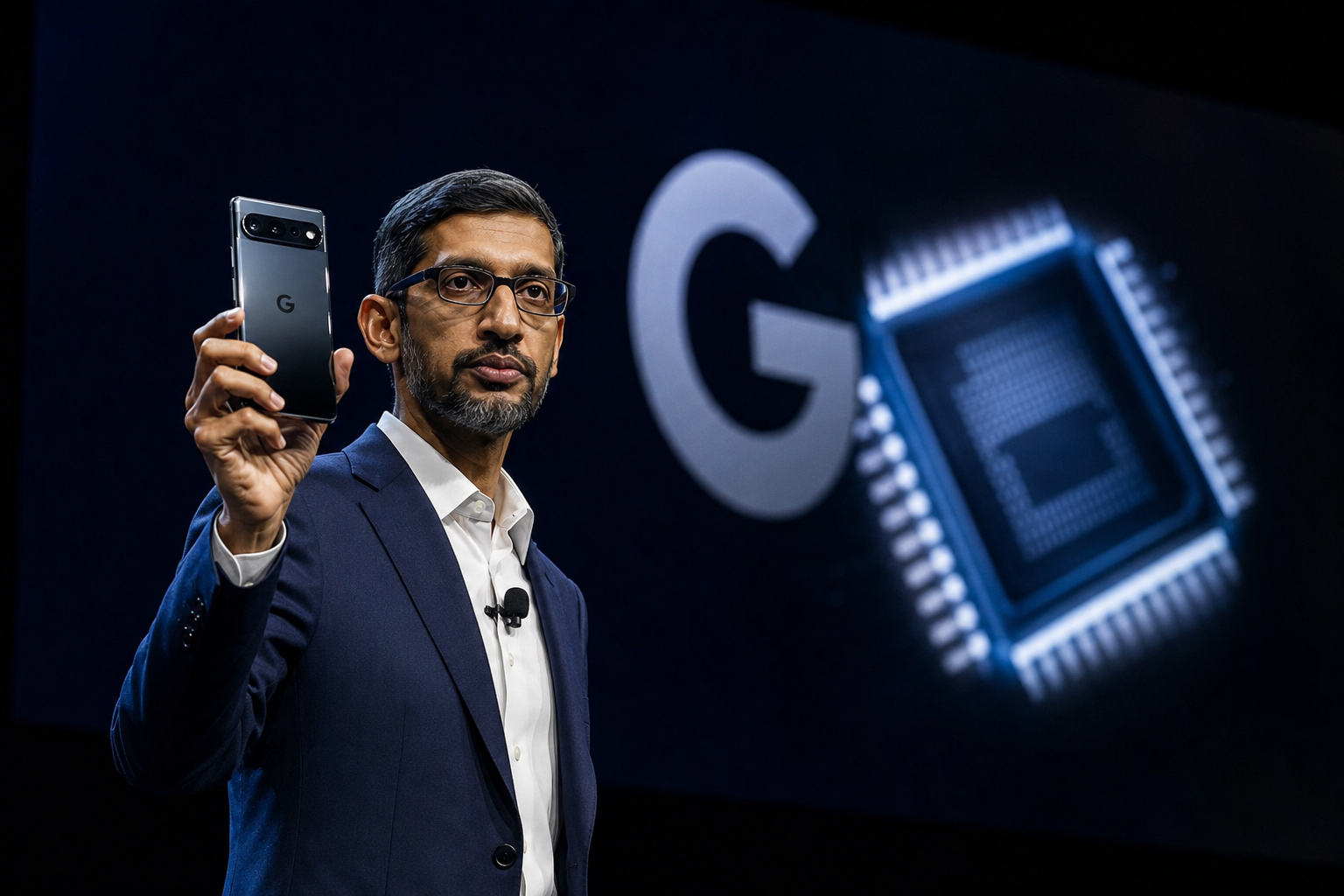
If you have been holding out for the upcoming Google Pixel 11, waiting to see if the endless barrage of leaks and rumors would finally pan out into a sensibly priced flagship, I have some bad news. The rumors were right, the price tags are heavier, and this time, the confirmation isn't coming from an anonymous supply chain analyst. It is coming straight from the top of Google’s hardware division.
Ahead of the highly anticipated Made By Google event slated for August 12, Google’s Vice President of Devices and Services, Shakil Barkat, sat down for an interview with 9to5Google to address the elephant in the room. Barkat confirmed that the entire Pixel family will see "dynamic price adjustments" directly resulting from a severe, industry-wide memory crisis.
But in a classic tech industry pivot, Google isn't just delivering the bad news and walking away. They are accompanying this price hike with a rather bold software promise: a "dedicated effort" to fundamentally rewrite how Android manages memory, making the operating system vastly more RAM-efficient.
As someone who has covered the smartphone industry for years, this entire situation feels like a masterclass in modern tech irony. We are being asked to pay more money for a device that, in some configurations, will actually feature less RAM than its predecessor, all while Google scrambles to optimize an operating system burdened by the very AI features they are relentlessly pushing.
Here is a deep dive into the realities of the Pixel 11 price hike, why the global RAM market is currently on fire, and whether Google’s promise of a leaner Android is a genuine breakthrough or just a well-timed PR spin.
The $12-per-Gigabyte Elephant in the Room
To understand why the Pixel 11 is going to cost you more, we have to look away from Mountain View and toward the global semiconductor supply chain. According to Barkat, the mobile industry is experiencing an unprecedented surge in memory costs. He cited recent data from Morgan Stanley that paints a grim picture: the cost of 1GB of RAM has skyrocketed from a manageable $2.80 in 2025 to an eye-watering $12 per gigabyte this year.
Let that sink in. That is more than a four-fold increase in the span of twelve months.
Google claims it has been eating these costs for as long as possible to shield consumers likely a reference to keeping the current Pixel 10 and Pixel 10a prices stable through the first half of the year. But the economics have fundamentally shifted. The reality is that no manufacturer, not even a trillion-dollar behemoth like Alphabet, is going to permanently subsidize component spikes at the expense of their hardware profit margins.
But here is where the irony gets incredibly thick. Why is there a RAM crisis in the first place? It is largely because the world’s biggest tech companies Google chief among them are buying up every available memory module on the planet to build massive data centers for generative AI. Furthermore, they are demanding higher-density LP-DDR chips for edge devices to run on-device AI models.
The industry’s collective obsession with cramming large language models into everything from smartphones to refrigerators has cratered the memory supply chain. Google is effectively raising phone prices because of a component shortage that its own AI arms race helped create.
Breaking Down the Pixel 11 Damage Report
So, what does this mean for your wallet when August 12 rolls around? Based on the official confirmations and heavily corroborated pricing leaks, we are looking at a minimum $100 price increase across the board for the premium models.
The base Pixel 11 is expected to jump from last year’s $799 entry point to $899. The Pixel 11 Pro XL and the Pixel 11 Pro Fold are seemingly locked in for a similar $100 bump.
However, there is a silver lining. To soften the blow of this price hike, Google is finally killing off the abysmal 128GB base storage tier. In 2026, 128GB is practically a rounding error when you account for 4K video, massive app sizes, and on-device AI models. Moving the base storage to 256GB is a necessary evolution, and it makes the $100 price increase slightly easier to swallow. If you were going to buy the 256GB Pixel 10 last year, you were already paying that higher premium anyway.
But then we get to the entry-level Pixel 11 Pro, and things get messy. Leaks heavily indicate that to control component costs in this RAM-starved market, Google is dropping the base RAM of the Pixel 11 Pro from 16GB down to 12GB.
For tech enthusiasts, this is a bitter pill. Paying $100 more for a device that features 25% less memory than the previous generation goes against the fundamental law of consumer electronics: things are supposed to get better and faster for the same price, not the other way around.
Here is a look at how the expected specs and pricing stack up:
Pixel 10 Series vs. Expected Pixel 11 Series Comparison
| Feature | Pixel 10 (2025) | Pixel 11 (2026 Expected) | Pixel 10 Pro (2025) | Pixel 11 Pro (2026 Expected) |
| Starting Price | $799 | $899 | $999 | $1,099 |
| Base Storage | 128GB | 256GB | 128GB | 256GB |
| RAM | 8GB / 12GB | 12GB | 16GB | 12GB (Base) |
| Processor | Tensor G5 | Tensor G6 (2nm) | Tensor G5 | Tensor G6 (2nm) |
| Modem | Exynos | MediaTek | Exynos | MediaTek |
| OS Updates | 7 Years | 7 Years | 7 Years | 7 Years |
(Note: Specs and prices based on current 2026 leaks and Google's official pricing guidance)
The "Dedicated Effort" for a Leaner Android
Faced with the reality of having to ship expensive phones with less RAM, Google had to find a software solution to a hardware problem. This brings us to the second major revelation from Barkat's interview: Google is initiating a "dedicated effort" to drastically reduce the memory footprint of the Android operating system and its wider app ecosystem.
For years, Android has been notorious for being a RAM hog. This isn't necessarily due to poor coding; it is a byproduct of how Android was designed. Android relies heavily on Java and virtual machines, which use a process called "garbage collection" to manage memory. Garbage collection requires a massive surplus of free RAM to run smoothly. Without it, the system chokes, apps crash, and the UI stutters.
Contrast this with Apple’s iOS. Because Apple tightly controls both the hardware and the software, iPhones have historically required significantly less RAM to achieve identical, if not better, performance. An iPhone with 8GB of RAM can often multitask just as efficiently as an Android phone with 12GB or 16GB.
Google is now attempting to pull off an Apple-level optimization miracle. They believe that because they now control the operating system (Android), the custom silicon (Tensor processors), and the on-device AI integration, they can finally trim the fat off Android.
If Google can actually re-architect how Android handles background processing and memory caching, a Pixel 11 with 12GB of RAM could theoretically feel just as fast and capable as a Pixel 10 with 16GB.
But as any developer will tell you, this is vastly easier said than done. Android isn't just on Pixels; it has to run on thousands of different hardware configurations across Samsung, Motorola, Xiaomi, and OnePlus. Forcing the entire Android ecosystem to become more memory-efficient is going to require massive API shifts and strict developer enforcement.
The AI Paradox
This brings us to the central conflict of the Pixel 11: Artificial Intelligence.
We already know that Google has revised the hardware requirements for its Gemini Intelligence platform. To run the latest on-device models, Android phones now require a minimum of 12GB of RAM, a qualified SoC, and specific media performance capabilities.
How exactly does Google plan to make Android "leaner" while simultaneously injecting heavy, persistent AI models right into the core of the operating system? The rumor mill suggests that Google’s upcoming Tensor chip will feature a heavily upgraded Neural Processing Unit (NPU) or TPU, designed to take the computational burden off the system RAM. If the Tensor chip can handle the AI heavy lifting natively, it might free up enough standard memory to keep the phone feeling snappy.
Still, it is a massive gamble. The "AI era" demands hardware excess, and Google is trying to execute it during an era of hardware austerity.
The Ripple Effect: Will the Pixel 10a Survive?
Perhaps the most troubling part of Barkat’s interview was his warning about the broader Pixel portfolio. He explicitly stated that "in-market" devices will also face dynamic adjustments.
This is a direct threat to the current mid-range king, the Pixel 10a. Right now, the Pixel 10a sits at an incredibly competitive $499 base price. If memory costs are bleeding Google dry, it is highly likely we will see the Pixel 10a jump to $549 or even $599 in the near future.
To mitigate this, Google will lean heavily on what they do best: aggressive carrier deals, generous trade-in values, and bundled subscriptions. When the Pixel 11 launches, you might see an $899 sticker price, but you will also likely see offers giving you $400 for your old Pixel 8, alongside a year of free Google One AI Premium. Google wants to keep you in their ecosystem, and they will use digital perks to mask the physical hardware costs.
Should You Upgrade to the Pixel 11?
With all this information on the table, the buying advice for August 2026 becomes incredibly nuanced.
Reasons to Upgrade to the Pixel 11:
- The 256GB Base Storage: If you constantly run out of space, the new base tier is a massive quality-of-life improvement.
- The New Tensor & Modem: The move to a 2nm manufacturing process and a new MediaTek modem should theoretically solve the two biggest complaints about the Pixel series: poor battery life and spotty cellular connectivity.
- 7 Years of Support: Buying a Pixel now means you are covered until 2033. That is incredible longevity.
Reasons to Skip the Pixel 11:
- The Price Hike: $899 is a steep entry point for the standard model.
- The RAM Downgrade on the Pro: Paying $1,099 for a phone that drops from 16GB to 12GB of RAM feels fundamentally wrong, no matter how much "software optimization" Google promises.
- You Own a Pixel 10: If you bought last year's model, there is absolutely zero reason to upgrade. The Pixel 10 has excellent cameras, plenty of RAM, and will get the new Gemini features anyway.
A Necessary Evil?
No one likes paying more for technology, especially when the specs sheet looks like it took a hit in the process. Google’s confirmation of the Pixel 11 price hike is a stark reminder that the tech industry doesn't operate in a vacuum. The global pivot to AI has real-world hardware consequences, and consumers are now footing the bill for the memory shortage.
I am genuinely curious to see if Google’s "dedicated effort" to lean out Android actually bears fruit. If they can successfully rewrite Android’s memory management to be as efficient as Apple’s iOS, this current RAM crisis might end up being a blessing in disguise for the long-term health of the platform.
But until we have the Pixel 11 in our hands on August 12 to test these claims, we are left with a simple, frustrating truth: the cost of entry into Google's premium ecosystem just went up, and you can thank the AI revolution for the bill.