

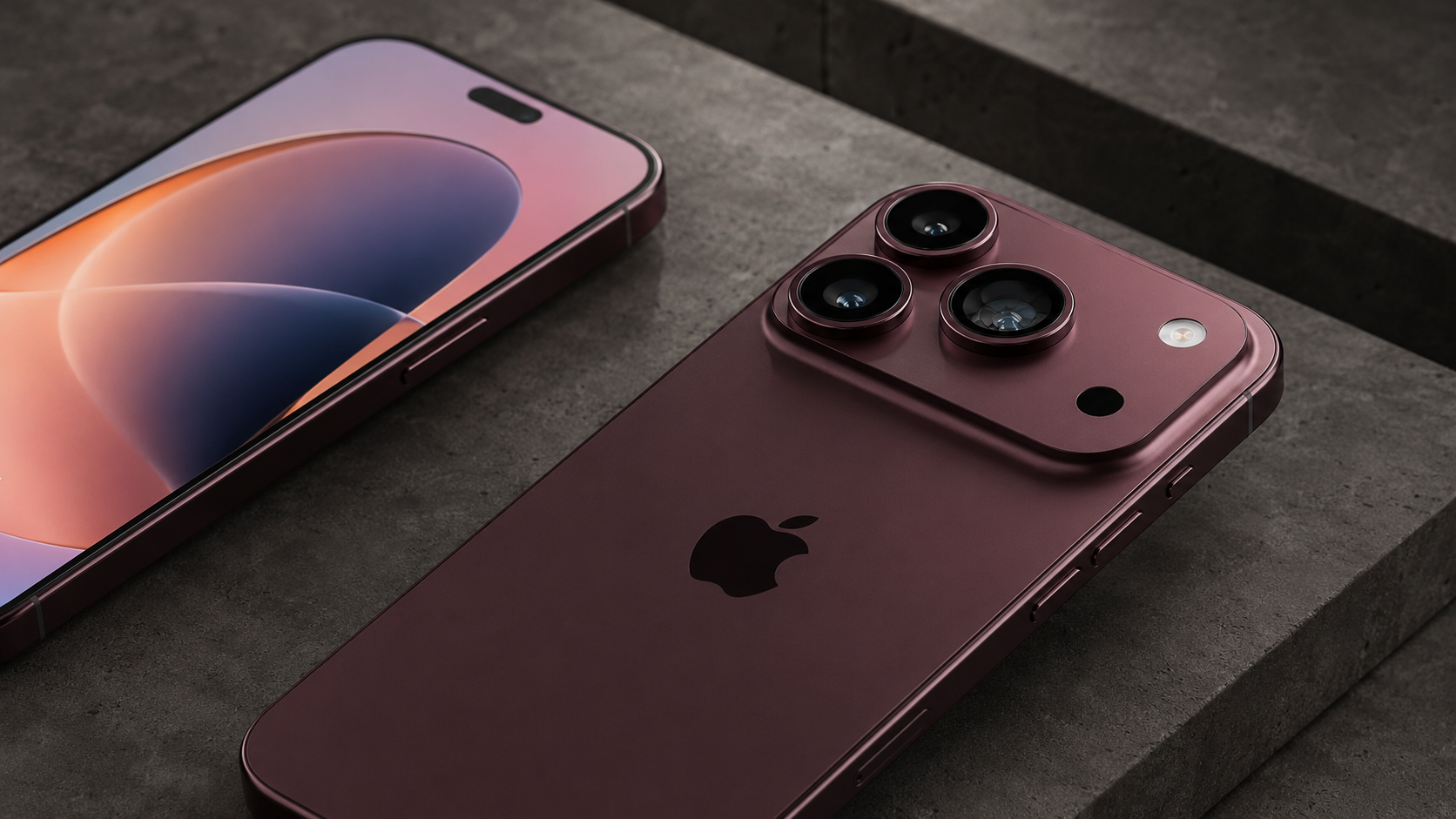
It is June 2026, and we are officially on the final stretch toward September. In the tech journalism world, September means only one thing: the annual Apple hardware event. Over the past few years, covering the smartphone industry has felt a bit like watching paint dry. Devices have matured, upgrades have been incredibly iterative, and a lot of us have struggled to find genuine excitement in a new chassis color or a slightly faster processor. The transition from the iPhone 15 to the 16, and even the 17 last year, felt like safe, calculated moves by a company comfortable in its dominance.
But as the supply chain leaks, factory whispers, and schematic dumps pour in for the upcoming iPhone 18 lineup, the narrative is drastically shifting. From what I am seeing across the board from TSMC’s production lines in Taiwan to lens manufacturers like LG Innotek Apple is not playing it safe this year. They are fundamentally tearing up their own playbook.
If you are currently holding onto an older device and wondering whether to upgrade now or hold out for the fall, you need to read this. The upcoming iPhone 18 series specifically the Pro and Pro Max models represents the most aggressive hardware leap we have seen out of Cupertino since the introduction of the iPhone X. Here is a completely unfiltered, human look at exactly what is coming, what it means for your daily usage, and why the smartphone landscape is about to get incredibly interesting.
The Great Release Schedule Shake-Up
For over a decade, Apple’s release strategy has been as predictable as the tides: four phones drop in September, you pre-order on Friday, and they arrive a week later. That era is reportedly over.
According to multiple verified supply chain analysts and confirmed by recent production schedules, Apple is staggering the iPhone 18 release. This September, the stage will belong exclusively to the high-end tier. We are expecting the 6.3-inch iPhone 18 Pro, the massive 6.91-inch iPhone 18 Pro Max, and the highly anticipated, long-rumored "iPhone Fold" (a device that unfolds to a 7.8-inch tablet).
Where is the standard iPhone 18? It has been pushed to the spring of 2027.
From an industry perspective, this makes perfect sense. Apple is facing immense production bottlenecks with the next-generation silicon required for these devices. By delaying the base models, Apple can allocate their most expensive, cutting-edge components directly to the premium demographic that is willing to pay top dollar. It also forces a harsh reality on consumers this fall: if you want a new iPhone in 2026, you are buying a Pro.
Silicon Deep Dive: The A20 Pro and the 2nm Reality
You cannot talk about the iPhone 18 without talking about what is powering it. For the last few years, we have been living in a 3-nanometer world. The iPhone 18 Pro will officially usher in the 2nm era, courtesy of the A20 Pro chip manufactured by TSMC on their cutting-edge N2 node.
But what does "2nm" actually mean when you are holding the phone? It’s not just tech jargon. A smaller nanometer process means Apple can pack billions of more transistors into the exact same physical space. The math translates to a projected 15% increase in raw processing speed and a massive 30% reduction in power consumption compared to the A19 chip.
There is a catch, though. TSMC has reportedly warned Apple that this 2nm manufacturing process is wildly expensive costing roughly 50% more to produce than the older 3nm chips. Yet, Apple is absorbing this cost. Why? Because they are locked in a vicious AI arms race.
To run next-generation Apple Intelligence features entirely on-device without relying on the cloud, the A20 Pro is adopting a new technology called Wafer-Level Multi-Chip Module (WMCM) packaging. This allows Apple to solder the RAM directly into the processor package, drastically reducing latency. Furthermore, we are seeing the iPhone 18 Pro Max bump up to a staggering 16GB of LPDDR6 RAM. In a market currently suffering from a global memory shortage (affectionately dubbed "RAMageddon" by industry insiders), securing 16GB of ultra-fast memory for millions of iPhones is a logistical miracle that will future-proof this device for half a decade.
The Camera Leap: The Return of Variable Aperture
If you ask me what the single most exciting feature of the iPhone 18 Pro Max is, it is the camera. Apple is finally adopting a variable aperture mechanism for its main 48MP sensor.
Every iPhone Pro from the 14 through the 17 has used a fixed aperture (recently stuck at f/1.78). This means the hole letting light into the camera is always the exact same size. If it's too bright outside, the phone relies entirely on digital software to adjust the exposure. If you are taking a portrait, the blurred background (bokeh) is entirely fake, generated by an algorithm cutting out your subject. Sometimes it looks great; sometimes it blurs out the edge of your glasses or your hair.
A variable aperture changes the game by physically opening and closing tiny mechanical blades over the lens, exactly like a professional DSLR camera.
- In dark environments: The lens opens incredibly wide to pull in raw, natural light, reducing that grainy, over-sharpened look we hate in night photography.
- In bright environments: The lens closes down.
- For group photos: By narrowing the aperture, you increase the physical depth of field. This means everyone in the photo—whether they are standing in the front row or the back row is perfectly in focus without computational guesswork.
Samsung actually tried this years ago with the Galaxy S9 in 2018, but they abandoned it because the mechanical parts were too thick and too expensive to manufacture at scale. Now, Apple has solved the puzzle alongside suppliers like Sunny Optical and LG Innotek.
Be warned, though: this hardware comes at a physical cost. Leaked schematics show the iPhone 18 Pro Max’s camera bump growing to an aggressive 13.77mm in thickness. It is going to be a chunky, formidable array.
Design, Display, and the Death of Thick Bezels
Let’s talk aesthetics. The iPhone 18 Pro Max is not getting a radical chassis redesign, but the front of the phone is going to look noticeably cleaner. For years, we have dealt with the "Dynamic Island" a clever software trick to hide a massive pill-shaped hole in the screen.
Reports indicate that Apple has finally figured out how to move the infrared (IR) sensors required for Face ID underneath the OLED display panel. While the actual selfie camera still needs a physical cutout, the Dynamic Island will shrink by an estimated 35%. It doesn’t sound like much on paper, but when you are watching a full-screen video or gaming, regaining that real estate at the top of your phone is incredibly satisfying.
The display panel itself is receiving a quiet but vital upgrade to LTPO+ Super Retina XDR OLED technology. Current leaks point to a 6.91-inch screen boasting a resolution of 2868 x 3200 pixels, but the real kicker is the refresh rate. We might finally see Apple jump from 120Hz to an ultra-fluid 144Hz refresh rate, matching premium gaming monitors.
Color-wise, if you are bored of the standard "Natural Titanium," Apple is testing a beautiful new Pantone shade: Dark Cherry (Pantone 6076), a deep, rich red with subtle purple undertones that is poised to become the flagship color this year, alongside Light Blue, Dark Gray, and Silver.
Battery Life and the Modem Liberation
I have always maintained that I would gladly trade a millimeter of phone thickness for a battery that actually survives a heavy day of travel. It seems Apple finally agrees.
The iPhone 18 Pro Max is expected to measure around 8.8mm thick, making it one of the thickest iPhones in recent memory, tipping the scales at over 240 grams. But inside that thicker frame sits a monstrous 5,100 to 5,200 mAh battery. When you combine the largest battery Apple has ever used with the 30% efficiency gains of the new 2nm A20 Pro chip, we are looking at a phone that could realistically push 40 hours of runtime on a single charge.
We also need to address the C2 Modem. For years, Apple has been trying to break free from its reliance on Qualcomm for cellular connectivity. The iPhone 18 Pro marks their declaration of independence. The device will debut Apple's in-house C2 modem, supporting ultra-fast mmWave 5G. More interestingly, insider rumors heavily suggest Apple is testing a partnership to enable full satellite internet connectivity, meaning you might be able to browse the web or send messages directly via satellite when you are entirely off the grid, expanding beyond the current emergency-only SOS feature.
SEO Specs Comparison: iPhone 17 Pro Max vs. iPhone 18 Pro Max
To put all of these upgrades into perspective, here is a hard data comparison of where we are today versus where we are heading in September 2026.
| Hardware Feature | Current iPhone 17 Pro Max (2025) | Upcoming iPhone 18 Pro Max (2026) |
| Processor Architecture | A19 Pro (Built on 3nm process) | A20 Pro (Built on TSMC 2nm N2 process) |
| System Memory (RAM) | 12GB LPDDR5X | Up to 16GB LPDDR6 (WMCM packaging) |
| Primary Camera System | 48MP with Fixed f/1.78 Aperture | 48MP with Mechanical Variable Aperture |
| Display Technology | 6.9-inch 120Hz ProMotion OLED | 6.91-inch 144Hz LTPO+ Super Retina XDR |
| Front Display Cutout | Standard Dynamic Island | 35% Narrower (Under-display IR sensor) |
| Battery Capacity | 4,252 mAh | 5,100 - 5,200 mAh |
| Device Thickness | 8.25 mm | 8.8 mm |
| Cellular Modem | Qualcomm Snapdragon X-series | Apple Custom C2 Modem (mmWave 5G) |
| Estimated Base Price | $1,199 (USD) | $1,199 (USD) |
Should You Wait?
Whenever I write these deep-dives, the question I always get on social media is, "Is it worth the wait, or should I just buy the current model right now?"
If you are rocking an iPhone 14 or older and your battery is absolutely decimated, buy a phone today. Don't suffer through the summer with a device that dies by lunchtime.
However, if your current phone is functional even if it's an iPhone 15 or 16 do not upgrade right now. Hold your ground until September. The integration of TSMC’s 2nm processor, the massive jump to 16GB of RAM, and the true mechanical variable aperture camera represent a generational reset for Apple. The iPhone 18 Pro Max isn't just an iterative update; it is the foundation for the next five years of Apple Intelligence and mobile photography. It is going to be heavier, it is going to be thicker, and the camera bump is going to be unapologetically massive, but for power users, content creators, and tech enthusiasts, it is exactly the upgrade we have been begging for.
Let the countdown to September begin.
iPhone 18 Pro Max Upgrade Analysis
This video provides an excellent cost breakdown of why the new variable aperture lens and 2nm chip are driving up manufacturing expenses for the upcoming release.