

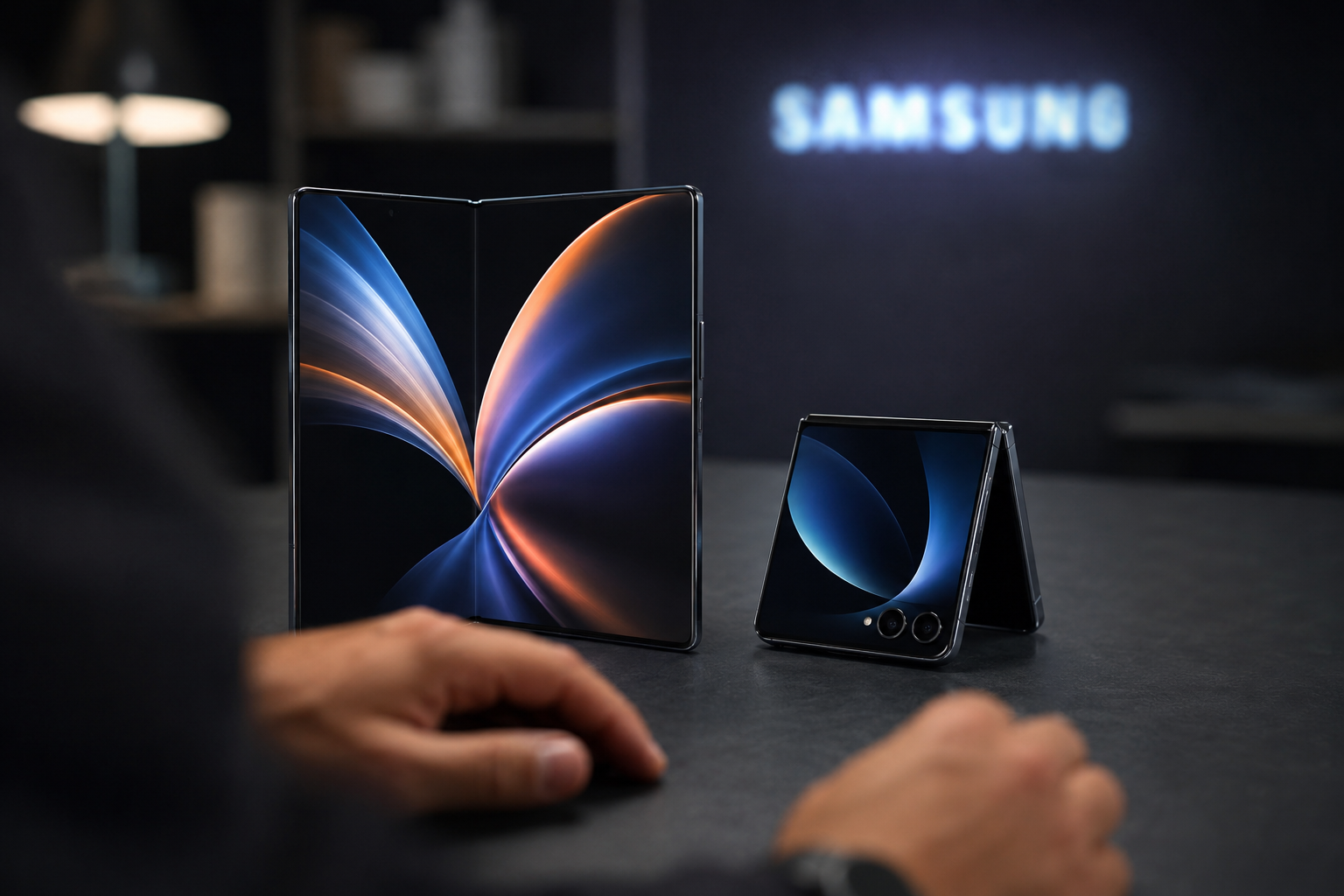
Samsung has essentially owned the foldable space since day one. But if we are being completely honest, the last few generations of the Galaxy Z Fold felt like the company was simply coasting. While competitors were pushing the boundaries of razor-thin chassis designs and massive battery capacities, Samsung handed us iterative updates. Well, that narrative dies today. Samsung has just launched its 2026 foldable lineup the Galaxy Z Fold8, the absolute juggernaut Galaxy Z Fold8 Ultra, and a highly refined Galaxy Z Flip8.
This is the most aggressive and polarizing pivot I have seen from the Korean tech giant in years. They have fundamentally split their book-style foldable strategy, completely redefined their camera hardware, and pushed structural materials to the absolute edge of modern physics. But is all of this change strictly positive? After diving deep into the spec sheets, analyzing the controversial camera choices on the standard Fold8, and weighing the eye-watering prices, I have some strong thoughts.
Here is my comprehensive breakdown of Samsung's 2026 foldables, how they actually stack up against each other, and most importantly, which one deserves your money.
The 2026 Foldable Landscape: Why Samsung Had to React
Before looking at the phones themselves, you have to understand the market pressure Samsung is facing in 2026. For the past two years, overseas brands have been releasing foldables that felt like black magic devices under 10mm thick when folded, packing massive 5000+ mAh batteries. Samsung’s response up until now was robust software and water resistance, but hardware-wise, they were looking a bit chunky.
Enter the new "Flex Titanium" technology. Samsung has integrated a titanium-alloy film with an enhanced titanium plate into the display structure of these new phones. This isn't just marketing jargon; it is the physical engineering required to strengthen display support and absorb pressure, allowing the devices to be drastically thinner while minimizing that dreaded screen crease. The result is a hardware lineup that finally reclaims the crown for premium, ultra-thin folding tech, completely changing how these devices feel in your pocket.
Samsung Galaxy Z Fold8 Ultra: The "No-Compromise" Flagship
Let’s start with the big one. The Galaxy Z Fold8 Ultra is Samsung’s brand-new top-tier foldable, and frankly, it is the phone that power users have been begging for since the Fold5. Designed for heavy productivity and content creation, the Fold8 Ultra is a masterclass in excess in the best way possible.
Unprecedented Thinness and Display Quality
When unfolded, the Z Fold8 Ultra measures a staggering 4.1mm thick. Let that sink in. Folded up, it sits at just 8.9mm, weighing only 215g. This means Samsung has created an 8.0-inch tablet that weighs less than some traditional slab smartphones. The main 8.0-inch QXGA+ Dynamic AMOLED 2X display offers a buttery smooth 1-120Hz adaptive refresh rate and peaks at a blinding 3000 nits of brightness. Whether you are editing spreadsheets or watching HDR movies in direct sunlight, screen legibility is no longer an issue. The cover screen is equally impressive, offering a 6.5-inch FHD+ canvas that feels entirely like a normal, albeit slightly tall (3:7 aspect ratio), flagship phone.
The Camera: S-Tier Photography Finally Arrives
Foldables have historically compromised on camera hardware because large sensors require physical depth. The Fold8 Ultra throws that compromise out the window. It features a massive 200MP primary sensor with HDR support, a 50MP ultra-wide lens, and a 10MP telephoto lens with 3x optical zoom.
From my perspective, this 200MP sensor is the game-changer. Paired with Qualcomm’s Snapdragon 8 Elite Gen 5 processor, you can now record 8K video directly to the device using Samsung’s APV codec, and even apply cinematic color grades on the fly with Cine LUT support. If you are a creator who has held off on foldables because the cameras were sub-par, the Ultra is the answer.
Battery Tech
To power this massive 8-inch screen, Samsung included a 5,000 mAh Silicon-Carbon (Si/C) battery. Silicon-Carbon technology allows for much higher energy density in a thinner physical footprint, which is exactly how Samsung managed to keep the phone 4.1mm thin without sacrificing longevity. Paired with 45W wired fast charging (which gets you to 67% in 30 minutes) and an expanded graphite cooling system, thermal throttling should be a thing of the past.
Samsung Galaxy Z Fold8: The Controversial Middle Child
If the Ultra is a masterclass in excess, the standard Galaxy Z Fold8 is an exercise in ruthless optimization. It is smaller, substantially lighter, and heavily redesigned from last year’s Fold7. But it comes with a major catch that I find incredibly hard to justify.
The Portability Dream
At just 201g and 4.5mm thick unfolded (9.7mm folded), the Galaxy Z Fold8 is Samsung’s lightest book-style foldable to date. It is an absolute joy to hold. Samsung opted for a smaller 7.6-inch main display and a 5.5-inch cover screen. The cover screen now utilizes an unconventional 10:16 aspect ratio, making it shorter and wider than previous generations. This makes one-handed typing drastically better. You no longer feel like you are typing on a remote control. Under the hood, it shares the exact same Snapdragon 8 Elite Gen 5 processor as the Ultra, alongside a very capable 4800mAh battery and 45W charging.
The Camera Downgrade: What Was Samsung Thinking?
Here is where my praise stops. Samsung removed the telephoto lens from the standard Z Fold8. Yes, you read that correctly. For a phone that retails at $1,899.99, you only get two rear cameras: a 50MP main sensor and a 50MP ultra-wide.
Samsung claims the 50MP main sensor is powerful enough to handle 2x optical quality zoom via sensor cropping, but anything beyond that is purely digital. In a 2026 flagship device approaching the two-thousand-dollar mark, omitting a dedicated optical zoom lens is frankly a slap in the face to consumers. While the ultra-wide lens gets a much-needed bump to 50MP (up from 12MP on the Fold7), the lack of optical zoom makes this phone strictly for people who value a lightweight build over camera versatility.
Samsung Galaxy Z Flip8: Maturing the Clamshell
While the Fold lineup is experiencing an identity crisis, the Galaxy Z Flip8 knows exactly what it wants to be: the ultimate lifestyle and fashion device, now supercharged for power users.
Samsung has shaved the Flip8 down to an incredibly thin 6.1mm when unfolded, and it weighs a mere 180g. It is the slimmest Flip device they have ever produced. The device sports a beautiful 6.9-inch FHD+ main display and a highly functional 4.1-inch HD+ cover screen, referred to as the FlexWindow.
The big story here isn't just the hardware, but how the software uses it. The FlexWindow is now an "AI-first" interface. Instead of just swiping through static widgets, Gemini Intelligence operates directly on the cover display. You can access contextual information, reply to complex messages, and trigger home automations without ever opening the phone.
Photography also gets a massive boost. The Flip8 steps up to a 50MP primary camera powered by Samsung's ProVisual Engine. Features like the Camcorder Grip controls, enhanced Super Steady stabilization, and dynamic bokeh for selfies finally elevate the Flip from a "fun" camera to a legitimately "great" camera.
Spec Showdown: Z Fold8 Ultra vs. Z Fold8 vs. Z Flip8
If you are a numbers person, here is exactly how the 2026 Galaxy Z series stacks up against one another based on the official spec sheets:
| Feature | Galaxy Z Fold8 Ultra | Galaxy Z Fold8 | Galaxy Z Flip8 |
| Starting Price | $2,099.99 | $1,899.99 | TBA / Varies |
| Main Display | 8.0" QXGA+ AMOLED (120Hz) | 7.6" QXGA+ AMOLED (120Hz) | 6.9" FHD+ AMOLED (120Hz) |
| Cover Display | 6.5" FHD+ (3:7 ratio) | 5.5" WUXGA+ (10:16 ratio) | 4.1" HD+ FlexWindow |
| Peak Brightness | 3000 nits | 3000 nits | High Brightness Vision Booster |
| Processor | Snapdragon 8 Elite Gen 5 | Snapdragon 8 Elite Gen 5 | Snapdragon 8 Elite Gen 5 |
| RAM | 12GB / 16GB | 12GB | 12GB |
| Rear Cameras | 200MP Main, 50MP UW, 10MP Tele (3x) | 50MP Main, 50MP UW (No Tele) | 50MP Main, 12MP UW |
| Battery & Charging | 5,000 mAh (45W Wired) | 4,800 mAh (45W Wired) | Standard Flip Capacity |
| Weight | 215g | 201g | 180g |
| Thickness (Unfolded) | 4.1mm | 4.5mm | 6.1mm |
| Durability | IP48 Dust/Water Resistant | IP48 Dust/Water Resistant | IP48 Dust/Water Resistant |
Performance: The Snapdragon 8 Elite Gen 5 Era
Across the entire 2026 lineup, Samsung has partnered with Qualcomm to utilize the customized "Snapdragon 8 Elite Gen 5 Mobile Platform for Galaxy". Built on a hyper-efficient 3nm process, this chipset features a blazing-fast octa-core setup.
What does this translate to in the real world? For one, extreme sustained performance. Foldables have traditionally struggled with heat dissipation because of their thin halves. By utilizing an expanded graphite cooling structure, heat is channeled away from the logic board much faster. You can actively play demanding 3D games, edit 8K video, or run Samsung DeX desktop mode for hours without the phone dimming the screen to save itself from melting.
Storage and memory configurations are also properly flagship-tier. All base models utilize blazing-fast UFS 4.x storage, with RAM starting at 12GB across the board, and the Ultra variant offering a massive 16GB tier for heavy multitaskers.
Software & AI: Android 17 and "Agentic" Experiences
Hardware is only half the battle. Out of the box, the new Z series devices run on Android 17 layered with One UI 9. More importantly, Samsung is promising 7 major Android OS upgrades and 7 years of security patches. Buying one of these phones is a long-term investment that will be supported well into the 2030s.
2026 is clearly the year of "Agentic AI." Artificial intelligence is no longer just a gimmick used to erase a photobomber from the background of your pictures. Samsung has integrated deep OS-level AI designed to act on your behalf.
- Now Brief: Think of this as a hyper-personalized morning report. It pulls contextual data from your routines, emails, and interests, presenting you with actionable cards on your cover screen.
- Now Nudge: This is genuinely useful. If you are texting a friend about meeting for coffee, Now Nudge automatically surfaces relevant next steps, like pulling up your calendar, suggesting a route, or saving a location directly inside the chat window.
- Gemini Notebook: Exclusive to the large screens, this feature gives you a persistent workspace where AI organizes your documents, meeting recordings, and scattered notes into cohesive summaries and reports.
While some users might find deep AI integration a bit overwhelming, the fact that you can run these workflows seamlessly side-by-side on an 8-inch canvas makes the Z Fold8 Ultra arguably the most powerful portable computer on the market right now.
Which One Should You Buy?
At the end of the day, foldables are a massive financial commitment. So, how should you spend your money?
Buy the Galaxy Z Fold8 Ultra if: You are a power user, a photographer, or someone who treats their phone as a primary workstation. Yes, at $2,099.99 it is incredibly expensive. However, you are finally getting a zero-compromise device. Between the 8.0-inch screen, the 4.1mm thinness, the 5,000 mAh battery, and the 200MP camera system, this is the definitive foldable of 2026.
Buy the Galaxy Z Flip8 if: You want a phone that disappears in your pocket, acts as a fashion statement, but still packs flagship power. The 50MP camera upgrade and the AI-driven FlexWindow make it a mature, highly capable device that is just plain fun to use.
Think twice about the standard Galaxy Z Fold8: I am going to be blunt I struggle to recommend the regular Z Fold8 to anyone but the most niche buyer. At $1,899.99, charging flagship prices for a phone with no optical zoom telephoto lens is a tough pill to swallow. While the 201g weight and the shorter, wider cover screen are fantastic ergonomic improvements, the hardware compromises are too severe when the Ultra exists for just $200 more. If you must have the lightest book-style foldable possible, buy it. Otherwise, save up for the Ultra.
Samsung has finally taken off the training wheels. The 2026 Galaxy Z series is a bold, aggressive lineup that fixes almost every lingering complaint we've had about foldables over the last half-decade. The foldable future is finally here, and it is thinner, brighter, and faster than ever.