

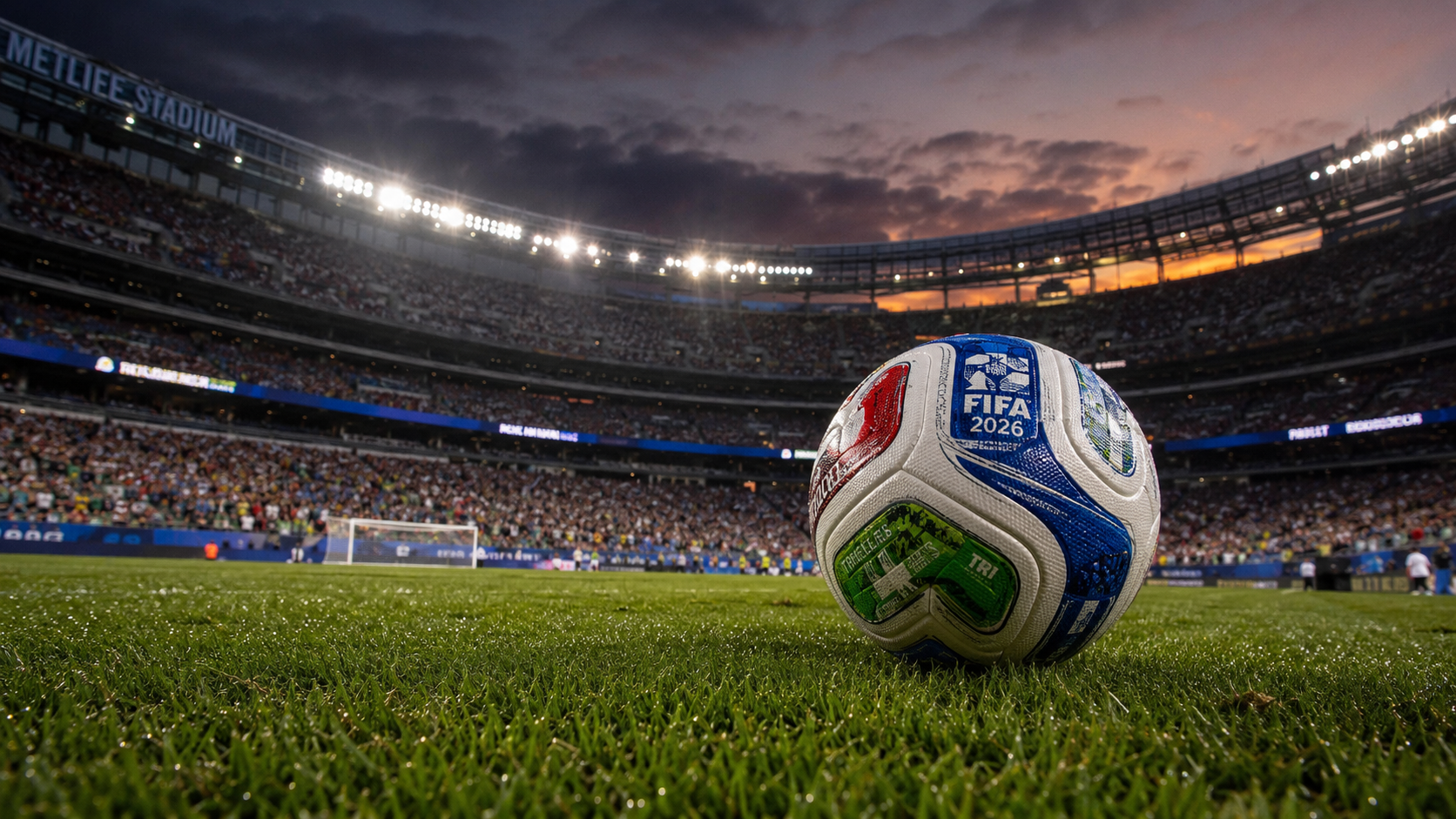
The waiting is over. As I sit down to write this on June 11, 2026, the global football landscape is shifting beneath our feet. Tonight, the opening whistle blows at the legendary Estadio Azteca in Mexico City. For the next 39 days, we are about to witness the largest, most sprawling, and arguably most chaotic sporting event ever staged.
Let's address the elephant in the room immediately: the jump from 32 to 48 teams has drawn plenty of cynicism. Purists argue that 104 total matches dilute the prestige of the tournament. I was skeptical too, until I looked at the actual group stage draw. The expansion hasn’t ruined the tournament; instead, it has created an entirely new breed of high-stakes, cross-continental group matchups that we have never seen before.
With 12 groups of four, the traditional dynamic is dead. Because the eight best third-placed teams now advance to a newly created Round of 32, every single goal, yellow card, and late-game substitute matters. You cannot afford to skip the group stages this year.
Based on tactical setups, squad depth, historical grudges, and sheer narrative weight, these are the mandatory group stage matches you must watch during this historic North American tournament.
1. Mexico vs. South Africa (Group A) – June 11
The Ultimate Nostalgia and Pressure Cooker
There is something poetic about the opening match of this tournament. Sixteen years ago, these two nations walked out in Johannesburg to kick off the 2010 World Cup, treating us to Siphiwe Tshabalala’s iconic rocket into the top corner and a dramatic Rafael Márquez equalizer. Tonight, the script flips. Mexico welcomes South Africa to the Estadio Azteca, a venue that becomes the first stadium in history to host matches across three different World Cup editions.
The pressure on El Tri is immense. Playing at home in front of 80,000 screaming fans is a massive advantage, but it can quickly turn into a toxic environment if things go south early. Javier Aguirre is back at the helm, and his assistant coach is none other than Rafael Márquez himself. They are leaning heavily on experienced leadership, including 41-year-old goalkeeper Guillermo Ochoa, who is incredibly entering his sixth World Cup.
South Africa enters this tournament with zero fear. Hugo Broos has built a disciplined, counter-attacking machine that topped a brutal African qualifying group. Keep your eyes on Teboho Mokoena in midfield and the young Philadelphia Union center-back Olwethu Makhanya. If South Africa exploits the space behind Mexico’s advancing fullbacks, we could see an opening-night shocker that throws Group A into absolute turmoil.
2. Brazil vs. Morocco (Group C) – June 13
Samba Flair Meets the Atlas Lions' Wall
If you want to see a tactical chess match played at 100 miles per hour, get to a screen when this match kicks off at MetLife Stadium in New York/New Jersey. Morocco charmed the world during their historic semi-final run in Qatar, proving they are no longer an underdog story they are a global powerhouse. Brazil, on the other hand, is entering this tournament with something to prove after years of international underachievement.
Morocco’s defensive block remains one of the hardest structures in world football to break down, but they have added creative depth over the last four years. Brazil’s attacking lineup is terrifyingly fluid, relying on lightning-fast wing play and rapid transitions.
This match will be won or lost in the half-spaces. If Morocco can isolate Brazil's central midfielders and trigger direct counter-attacks through the wide areas, they will repeat their past friendly successes against the South American giants. For Brazil, this is the ultimate litmus test to see if their tactical balance can survive a disciplined, elite defense.
3. Netherlands vs. Japan (Group F) – June 14
The Absolute Purist's Dream in Dallas
This is my personal favorite matchup of the entire opening week. If you appreciate spatial awareness, intricate passing lanes, and high-intensity pressing systems, this game at AT&T Stadium in Dallas is mandatory viewing.
The Dutch national team has spent the last two years retooling their identity around a highly versatile, mobile backline and technical possession. However, they are coming up against a Japan squad that is arguably the most tactically sophisticated team in the entire 48-team field.
Japan doesn't care about dominating raw possession percentages anymore. As they proved against Germany and Spain in 2022, they are masters of the "calculated trap" allowing opponents to pass into specific zones before triggering a ferocious, coordinated press to win the ball and score within three passes. The battle between the Dutch midfield pivots trying to break the lines and the Japanese defensive traps will be an absolute masterclass in modern football management.
4. France vs. Senegal (Group I) – June 16
The MetLife Blockbuster Loaded with Narrative
When France and Senegal share a football pitch, history hangs heavy in the air. Ever since Senegal stunned the reigning world champions in the opening match of the 2002 World Cup, this fixture has carried immense emotional weight. Fast forward to 2026, and this Group I clash at MetLife Stadium is arguably the most physically imposing matchup of the group stage.
France enters the tournament with an embarrassingly deep squad, led by a prime Kylian Mbappé who is actively chasing tournament immortality. They remain the benchmark for converting raw athletic dominance into structured, winning football.
But Senegal is uniquely equipped to fight fire with fire. Their squad possesses the physical profile, recovery speed, and tactical maturity to match France step-for-step in transition. This will not be a game where one team sits back and parks the bus; it will be a chaotic, end-to-end battle featuring some of the absolute fastest players on the planet.
5. England vs. Croatia (Group L) – June 17
A Classic European Grudge Match in Texas
The footballing gods love drama, which is the only explanation for why England and Croatia keep finding each other in major tournaments. From the heartbreak of the 2018 semi-final in Moscow to tense Euros encounters, these two nations know exactly how to push each other's buttons. They meet on June 17 at AT&T Stadium in Dallas for a match that will almost certainly decide who tops Group L.
England’s squad is overflowing with young, elite attacking talent operating at the absolute peak of European club football. On paper, they should control this game. But Croatia is a footballing miracle that defies aging curves and squad rebuilding cycles.
Even with a transitioning roster, Croatia’s ability to slow down the tempo of a match, retain possession under immense pressure, and manipulate the clock is a psychological hurdle that England has historically struggled to clear. If England gets frustrated by Croatia's mid-block, look for this game to turn into an absolute street fight in the second half.
6. Uruguay vs. Spain (Group H) – June 27
The Finale of the Group Stage Heavyweights
As the group stage nears its conclusion, all eyes will shift to Miami for a brutal collision between two totally distinct styles of football. Spain enters the 2026 World Cup as the absolute statistical favorite according to many analytical models, fresh off deep continental runs and armed with the tournament's most electrifying young winger, Lamine Yamal. Their style is clear: relentless possession, suffocating counter-pressing, and high-volume chance creation.
Uruguay offers the perfect antidote. Under a high-pressing, hyper-aggressive tactical blueprint, the South Americans play with a level of intensity that borderlines on vertical warfare. They do not give technical midfielders a single second to turn on the ball.
This match is a fascinating ideological clash. Can Spain’s pristine, one-touch passing patterns survive the physical, high-octane press of a hungry Uruguay team in the humid Miami summer? It is the perfect, explosive way to wrap up the group stage before heading into the knockout rounds.
Old Structure vs. New Structure: The 2026 Format Shift
To understand why these group stage matches carry a completely different level of strategic weight compared to previous tournaments, look at how the structural blueprint of the competition has altered.
| Feature | Old Format (Qatar 2022) | New Format (North America 2026) |
| Total Participating Teams | 32 Teams | 48 Teams |
| Group Stage Configuration | 8 Groups of 4 Teams | 12 Groups of 4 Teams |
| Total Tournament Matches | 64 Matches | 104 Matches |
| Tournament Duration | 29 Days | 39 Days |
| Knockout Stage Starting Point | Round of 16 | Round of 32 |
| Primary Advancement Rule | Top 2 teams from each group | Top 2 + 8 best 3rd-placed teams |
| Maximum Matches for Finalists | 7 Matches | 8 Matches |
This structural design drastically alters how managers will coach these games. In the old 32-team format, losing your opening match meant you were essentially staring over the precipice of elimination. In 2026, a team can lose an opening match, secure a decisive win in their second game, draw their third, and easily march into the Round of 32 as a high-performing third-placed team. Goal differential across all groups will be monitored frantically by fans and analytical desks alike on the final days.
Key Stadium Specifications & Venue Impacts
The physical environment of this multi-national World Cup will heavily dictate match outcomes. Traveling across three massive countries introduces climate variables, altitude shifts, and synthetic-to-grass turf conversions that teams must manage seamlessly.
- Estadio Azteca (Mexico City): Sits at an altitude of over 7,200 feet (2,200 meters) above sea level. For the opening match of Mexico vs. South Africa, the thin air will drastically affect ball flight dynamics and player cardiovascular recovery. Foreign teams who haven't spent weeks acclimating will struggle heavily in the final 20 minutes of games here.
- MetLife Stadium (New York/New Jersey): The venue for the final on July 20, as well as the massive Brazil vs. Morocco and France vs. Senegal clashes. This stadium utilizes a sophisticated temporary natural grass system laid over its traditional surface specifically for FIFA compliance, altering how cleanly the ball rolls compared to permanent grass fields.
- AT&T Stadium (Dallas): A completely enclosed, climate-controlled environment. The Netherlands vs. Japan and England vs. Croatia matches will not be dictated by heavy wind or sudden summer downpours, offering a pristine, lightning-fast surface that heavily favors technically precise passing sides.
The Compelling Human Storylines of 2026
Beyond the tactics and the stadiums, a World Cup is ultimately defined by human drama. This tournament marks the definitive intersection of two completely different generations of football.
The True Last Dances: Messi and Ronaldo
We have to talk about the veterans. No storyline looms larger over this tournament than the reality that this is the final global stage for both Lionel Messi and Cristiano Ronaldo.
Messi arrives at 38 years old, playing with the absolute freedom of a man who has already conquered his white whale in Qatar. He doesn't need to carry the weight of an entire nation on his back anymore, making him an incredibly dangerous, loose creator.
Meanwhile, Ronaldo arrives at 41 years old, still serving as Portugal's focal talisman despite endless public debates over his role in a modern, high-pressing team. The tournament brackets are aligned in a way that opens up a fascinating mathematical possibility: if results fall a certain way, we could see one final, definitive Messi-versus-Ronaldo showdown in a quarter-final in Kansas City on July 11. It is a cinematic scenario that would completely paralyze the sporting world.
The Rise of the New Titans
While the legends prepare to bow out, the next generation is ready to claim the throne. Erling Haaland has single-handedly dragged Norway back to the World Cup for the first time in 28 years, giving the tournament the most lethal pure number nine on the planet.
Simultaneously, Spain’s Lamine Yamal arrives as a legitimate teenage global superstar, carrying the creative expectations of a European giant on his shoulders. Watching these young stars navigate the immense, suffocating pressure of a World Cup group stage is worth the price of admission alone.
Why This World Cup Matters
It is incredibly easy to look at the corporate side of modern football the expanded fields, the multi-city travel schedules, the endless sponsorship activations and feel a sense of fatigue. But the second that referee blows the whistle tonight at the Azteca, all of that noise is going to evaporate.
The 48-team expansion isn't just about playing more games; it is about extending the borders of the sport. The inclusion of enthusiastic debutants like Curaçao, Cape Verde, Jordan, and Uzbekistan means that millions of people are experiencing the unmitied joy of a World Cup for the very first time.
Football, at its absolute core, belongs to everyone. The beauty of the group stage is that it provides a sanctuary where global political divides, travel complications, and expert projections fade into the background. For the next 39 days, the world is going to watch, argue, cry, and celebrate together. Make sure your calendar is clear—you aren't going to want to miss a single second of it.