

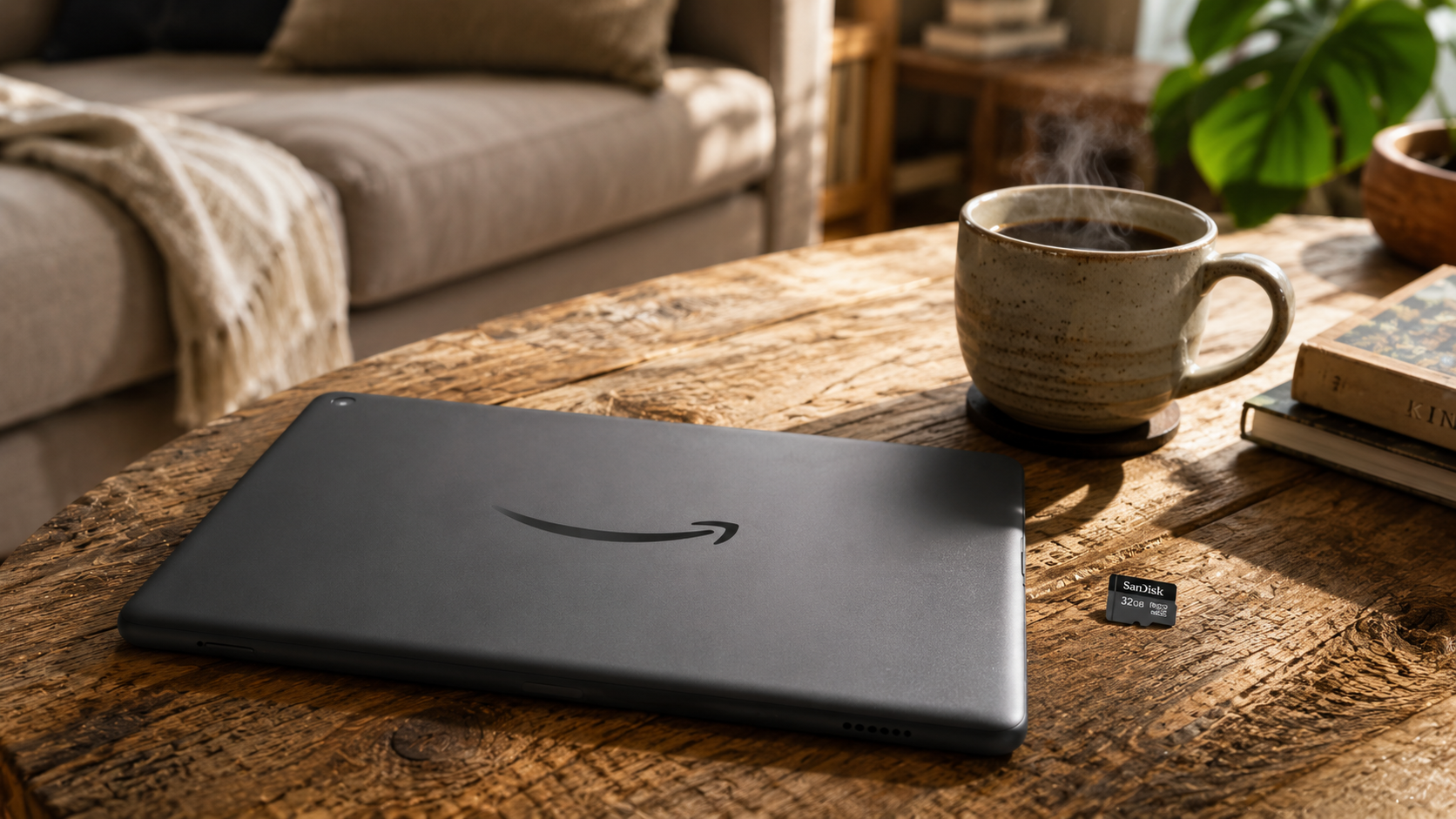
If you follow the tablet market closely, you know that outside of Apple’s heavily publicized iPad events, hardware updates usually leak months in advance. Yet, waking up in early July 2026, I found a complete surprise sitting on Amazon’s digital storefront. Amazon quietly rolled out a mid-cycle refresh for its wildly popular Fire HD 10 tablet. No flashy press release, no big keynote just a stealth drop of a device that fixes one of the biggest bottlenecks in the Fire tablet ecosystem, while simultaneously introducing a very confusing downgrade.
I have spent years testing, reviewing, and daily-driving Amazon tablets. They occupy a very specific, utilitarian space in my tech arsenal. They are the devices I toss on the nightstand for late-night Netflix binges, hand to my nieces without fear of financial ruin, and use as smart home hubs. They are cheap, durable, and notoriously underpowered.
This July 2026 refresh attempts to fix that last point. The headline feature is a bump to 4GB of RAM a massive deal for a tablet line that has historically choked on heavy web browsing. But Amazon also raised the price to $155 and completely axed the 64GB storage tier.
Let's break down exactly what this new 2026 Amazon Fire HD 10 offers, how it performs in the real world, and whether that $155 asking price makes sense when compared to older models and the premium Fire Max 11.
Finally Escaping the Memory Bottleneck: The 4GB RAM Upgrade
To understand why a 1GB increase in RAM is the entire selling point of this tablet, you have to look at the history of the Fire HD 10. When the 2017 model launched, it shipped with a miserable 2GB of memory. Opening a few tabs in the Silk Browser meant watching the page redraw from scratch every time you swapped between them. The 2023 version bumped this to 3GB, which made things tolerable but still left the tablet struggling with split-screen multitasking or heavily layered Android apps.
By moving to 4GB of RAM in the 2026 refresh, Amazon has finally brought its 10-inch workhorse up to modern baseline standards. Fire OS which is fundamentally a heavily modified version of Android is aggressive about killing background tasks to save memory. With 4GB, you hit that wall far less often.
During my testing, the difference is immediately noticeable if you are a heavy browser user. I routinely keep tabs open for Amazon shopping, Reddit, and a few news sites. On the older 3GB model, flipping back to an hour-old tab forced a hard refresh. On this new 4GB model, the page is waiting right where I left it. The 2GHz octa-core processor (the same chip carried over from the 2023 edition) feels noticeably snappier simply because it isn't constantly offloading data from a full memory bank.
Do not misunderstand me—this is still a budget tablet. You are not going to edit 4K video on this device, and heavy 3D games like Genshin Impact will still struggle with frame drops. But for the core demographic of this device people who want to read, browse, and watch video without the UI stuttering—the 4GB RAM upgrade is a legitimate game-changer.
The Storage Caveat: Why is there only a 32GB Option?
Here is where the 2026 Fire HD 10 gets weird. While Amazon upgraded the memory, they quietly nerfed the storage configurations. This new model is currently only available with 32GB of internal storage. If you want a 64GB version, you have to buy the older, slower 2023 model.
In 2026, launching a media consumption device capped at 32GB internally feels like a massive misstep. Out of the box, Fire OS and pre-installed system apps eat up roughly 9GB, leaving you with just over 20GB of usable space. If you are downloading a few seasons of The Boys on Prime Video for a long flight, you are going to hit that storage ceiling incredibly fast.
I suspect this is a supply chain reality masked as a business decision. By standardizing a single 32GB motherboard, Amazon keeps manufacturing costs down. They are heavily relying on the fact that this tablet includes a dedicated MicroSDXC card slot.
If you buy this tablet, you absolutely must factor in the cost of a MicroSD card. The tablet supports expansion up to 1TB. I immediately slotted in a 128GB card (which costs about $15 these days) and set the tablet to automatically download all Prime Video and Netflix content directly to the SD card. It is an easy workaround, but forcing the consumer to manage external storage on a brand-new device is a frustrating user experience.
Battery Life and Charging Speeds
Amazon has always been reliable when it comes to battery life on its larger tablets, mostly because the processors sip power and the displays aren't pushing 120Hz refresh rates.
The 2026 Fire HD 10 maintains the advertised 13 hours of mixed-use battery life. In practical terms, translating to about 10.5 hours of continuous high-definition video streaming at 70% brightness. It is the tablet you can leave on your coffee table for three days and still find it with a 40% charge when you finally pick it up.
The actual upgrade here is the charging speed. The 2023 model took an agonizing five hours to charge from zero to full via USB-C. Amazon has tweaked the charging intake on this new model, dropping the total charge time down to a flat four hours. It still is not "fast charging" by modern smartphone standards, but shaving an hour off the wall time is a welcome quality-of-life improvement.
Verified Specifications of the 2026 Fire HD 10
To cut through the marketing jargon, here are the hard hardware specifications for the July 2026 release of the Amazon Fire HD 10.
- Display: 10.1-inch IPS LCD touchscreen
- Resolution: 1920 x 1200 pixels (1080p Full HD), 16:10 aspect ratio (~224 ppi density)
- Processor: Octa-core 2.0 GHz (MediaTek)
- RAM: 4GB
- Internal Storage: 32GB (expandable via MicroSD up to 1TB)
- Battery Life: Up to 13 hours mixed-use
- Charging Time: 4 hours (via USB-C 2.0)
- Cameras: 5 MP front-facing camera (1080p video recording), 5 MP rear camera
- Audio: Dual stereo speakers with Dolby Atmos support, 3.5mm headphone jack
- Connectivity: Wi-Fi 802.11 a/b/g/n/ac (dual-band Wi-Fi 5), Bluetooth 5.3
- Weight: 432 g (15.24 oz)
- Launch Price: $155 (with lockscreen ads)
Display and Audio: Sticking to the Formula
Amazon did not touch the display panel for this refresh, and honestly, they did not need to. The 10.1-inch, 1920 x 1200 resolution screen is perfectly fine for the price bracket. It has a pixel density of 224ppi, which means text in the Kindle app reads sharply, and 1080p video looks crisp.
The display utilizes an IPS LCD panel. The colors are accurate enough, though you will not get the deep, inky blacks of an OLED screen. My only persistent complaint about Amazon's displays is the peak brightness. It is perfectly viewable indoors, but if you take this tablet out to the patio on a sunny afternoon, the screen glare will overpower the backlight.
On the audio front, the dual stereo speakers firing out of the top edge (when held in landscape) are surprisingly robust. They feature Dolby Atmos tuning, and while the soundstage is narrow, vocal clarity is excellent. You won't hear deep bass lines in music, but dialogue in movies cuts through clearly. Plus, Amazon is one of the few companies left that still includes a 3.5mm headphone jack. Being able to plug in a cheap pair of wired earbuds when my Bluetooth headphones die is a massive win for travel.
The Camera Situation
I will keep this brief: do not use this tablet for photography. The front and rear both feature 5MP sensors capable of 1080p video. The front camera is positioned on the long edge, which is the correct orientation for landscape video calls.
If you are jumping on a Zoom or Skype call with family, the camera is functional. People will see your face. But the sensor struggles violently in low light, producing a grainy, washed-out image. If you have a modern smartphone in your pocket, use that for photos. The tablet cameras exist purely for utility.
Price, Lockscreen Ads, and The Amazon Ecosystem Tax
The 2026 Fire HD 10 retails for $155. This is a $15 increase over the base price of the previous generation. Given the jump to 4GB of RAM, the price hike is justifiable, but it pushes the tablet closer to the $200 threshold where consumers start looking at entry-level iPads or Lenovo options.
The major catch is that the $155 price tag includes Amazon's "lockscreen ads." When you wake the tablet, you will see a full-screen advertisement for a book, movie, or product on Amazon before you swipe to unlock. I have used Fire tablets for years and genuinely tune these ads out they do not interrupt your apps or pop up while you are reading. However, if you find them offensive to your aesthetic sensibilities, you have to pay Amazon an extra $15 to remove them permanently, bringing the true cost of an ad-free tablet to $170.
You also have to accept the reality of Fire OS. There is no Google Play Store out of the box. You cannot natively download YouTube, Gmail, or Google Chrome. You are locked into the Amazon Appstore, which relies on the Silk Browser for web surfing. While you can sideload the Google Play Store if you possess some basic technical literacy (a quick internet search will yield a ten-minute tutorial), you are buying into Amazon's walled garden. If your life revolves around native Google apps, this operating system will frustrate you endlessly.
Head-to-Head: 2026 Fire HD 10 vs. The Competition
If you are shopping the Amazon ecosystem right now, you are likely weighing this new model against the older 2023 version or the premium Fire Max 11. Here is how they stack up.
| Feature | New Fire HD 10 (2026) | Fire HD 10 (2023) | Fire Max 11 |
| Price (Base) | $155 | $139 (often discounted) | $229 |
| Screen Size | 10.1-inch FHD | 10.1-inch FHD | 11-inch 2K (2000x1200) |
| RAM | 4GB | 3GB | 4GB |
| Storage Options | 32GB only | 32GB / 64GB | 64GB / 128GB |
| Processor | Octa-core 2.0 GHz | Octa-core 2.0 GHz | Octa-core 2.2 GHz |
| Charging Time | 4 hours | 5 hours | 4.2 hours |
| Build Material | Plastic | Plastic | Aluminum |
Which should you buy?
If you currently own a 2023 Fire HD 10, do not upgrade. The jump from 3GB to 4GB of RAM is nice, but not worth tossing a perfectly good one-year-old tablet.
However, if you are holding onto a 2019 or 2021 model that is stuttering and dying on the charger, the 2026 Fire HD 10 is the clear choice. It gives you the memory parity of the more expensive Fire Max 11, saving you nearly $75, provided you don't mind the plastic build and are willing to buy a MicroSD card.
A Flawed But Necessary Upgrade
The July 2026 Amazon Fire HD 10 is a classic example of giving with one hand and taking with the other. The upgrade to 4GB of RAM is exactly what this hardware line desperately needed to stay relevant. It fundamentally improves the daily browsing and multitasking experience, elevating the tablet from a sluggish budget toy to a competent everyday media machine. Faster charging times are the cherry on top.
Conversely, restricting the internal storage to a paltry 32GB is an annoying cost-cutting measure that shifts the burden of storage management onto the user.
Despite its flaws and the inherent limitations of the Amazon app ecosystem, this tablet remains the undisputed king of budget media consumption. For $155, you are getting a durable, reliable screen with solid audio that handles streaming, reading, and light web browsing without skipping a beat. It isn't going to replace your laptop, but as a secondary screen for your digital life, the 2026 Fire HD 10 finally has the memory it needs to run smoothly.