

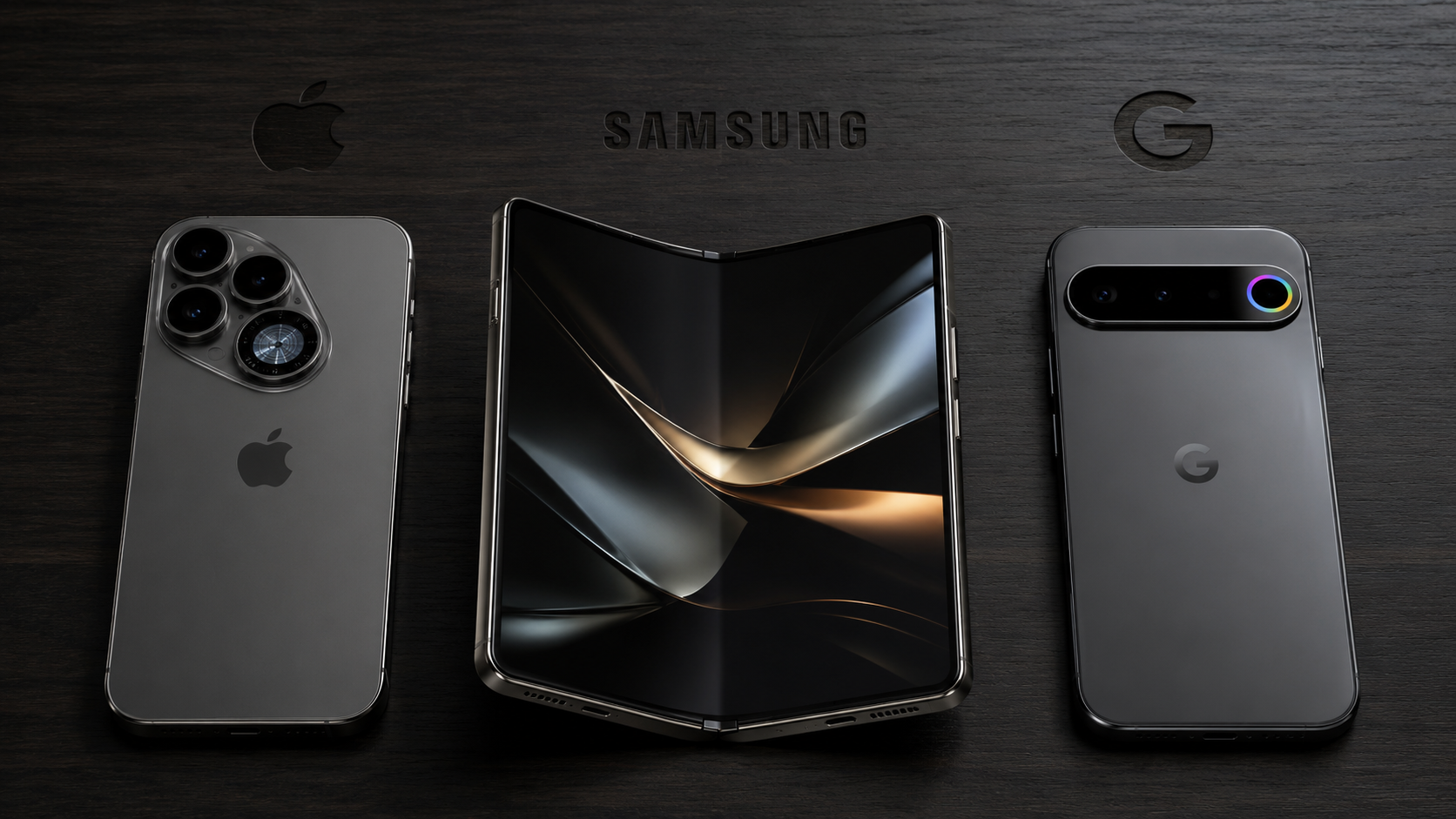
We are officially halfway through 2026, and if you are currently nursing a smartphone with a degrading battery or a cracked screen, I have one crucial piece of advice for you: hold off on upgrading for just a few more months.
The first half of the year was, frankly, a bit sleepy. We saw a lot of iterative, minor spec bumps and software-heavy marketing pushes. But as we look toward the third and fourth quarters of 2026, the mobile industry is preparing for a massive hardware reset. We are finally crossing the threshold into the 2nm silicon era, foldables are structurally mutating to fix their biggest flaws, and smartphone cameras are adopting authentic, mechanical variable apertures.
The rumor mill has solidified into supply chain reality. In just a matter of weeks starting with Samsung's Unpacked event in late July and bleeding into Apple and Google’s respective September showcases the flagship market is going to look radically different.
Here is my unfiltered, technical breakdown of the absolute best upcoming smartphones launching in the second half of 2026, complete with verified supply chain leaks, pricing expectations, and my honest take on who should actually buy them.
1. Apple iPhone 18 Pro & Pro Max: The Variable Aperture Leap
For the past few years, the iPhone Pro lineup has felt incredibly safe. Apple found a titanium chassis design that worked, slapped a slightly faster chip inside, and called it a day. But September 2026 is shaping up to be the most aggressive launch cycle Apple has executed since the iPhone X.
In a massive structural shift, Apple is reportedly delaying the base model iPhone 18 until the spring of 2027. When Tim Cook takes the stage this September, the spotlight will be entirely hogged by the premium tier: the iPhone 18 Pro, the iPhone 18 Pro Max, and the highly anticipated foldable "iPhone Ultra."
The End of Fixed-Focus Photography
The biggest reason to wait for the iPhone 18 Pro is the camera array. Apple is finally introducing a mechanical variable aperture to the main lens. Currently, smartphone lenses have a fixed, wide-open aperture (usually around f/1.5 or f/1.7), which is great for low light but terrible for keeping multiple subjects in focus. A variable aperture means the camera can physically close its iris to f/2.4 or f/4.0 when you are shooting landscapes or group photos, resulting in edge-to-edge sharpness that digital processing simply cannot fake.
The A20 Pro: TSMC’s 2nm Masterpiece
Under the hood, the iPhone 18 Pro series will be the first mainstream device to ship with silicon built on TSMC’s 2nm manufacturing process. The A20 Pro chip is going to be absurdly efficient. Combined with a rumored 5,200 mAh battery in the Pro Max variant, we might be looking at a phone that genuinely lasts two full days under heavy use.
Key Specs & Leaks (iPhone 18 Pro Series)
- Processor: Apple A20 Pro (2nm TSMC Node)
- RAM Upgrade: 12GB unified memory (Specifically expanded to handle heavy on-device Apple Intelligence tasks).
- Display: 6.3” (Pro) and 6.9” (Pro Max) LTPO+ OLED.
- Camera: Triple setup with a variable-aperture main sensor and a massive 24MP front-facing selfie camera.
- Connectivity: Apple’s new in-house "C2" custom 5G modem.
- Design Change: A heavily reduced, 35% narrower Dynamic Island.
My Verdict: If you care about mobile photography, the variable aperture is the holy grail. However, be prepared for a heavy device; leaks suggest the Pro Max will cross the 240-gram threshold, making it the heaviest iPhone ever produced.
2. Samsung Galaxy Z Fold 8 Lineup: The "Wide" Revolution
If you have avoided folding phones because the outer screen feels like you're typing on a cramped television remote, July 22, 2026, is the date you need to circle on your calendar.
Samsung has dominated the foldable market by default, but with Apple's foldable looming, Samsung is forced to innovate. For the first time, they are splitting the Z Fold lineup into two distinct flagship models: the Galaxy Z Fold 8 Ultra (tall, premium, spec-heavy) and the highly requested Galaxy Z Fold 8 Wide.
Fixing the Form Factor and the Crease
The "Wide" variant is exactly what it sounds like. Samsung is finally adopting the passport-style, wider aspect ratio popularized by the Google Pixel Fold and OnePlus Open. It gives you a normal, comfortable, typing-friendly smartphone screen when closed, and a massive tablet when opened.
More importantly, Samsung Display is debuting a new dual-UTG (Ultra-Thin Glass) "crease-less" panel. Early supply chain dummy units confirm that the dreaded center canyon that has plagued Samsung foldables for seven generations is practically invisible to the touch on the Z Fold 8.
Power and Thermals
To power this dual-screen setup, Samsung is utilizing Qualcomm's beastly Snapdragon 8 Elite Gen 5 for Galaxy. Interestingly, rumors indicate that while the flagship Fold series gets the premium Snapdragon, Samsung may shove Exynos chips into the cheaper Z Flip 8 models to save costs.
Key Specs & Leaks (Galaxy Z Fold 8 Ultra)
- Processor: Snapdragon 8 Elite Gen 5 for Galaxy.
- Displays: 6.5-inch LTPO OLED Cover / 8-inch LTPO OLED Inner (2,600 nits peak brightness).
- Cameras: 200MP Main with OIS, 50MP Ultrawide, 10MP 3x Telephoto.
- Battery: Expanded 5,000 mAh dual-cell with 45W wired charging.
- Durability: IP48 dust and water resistance, titanium frame.
- Expected Price: Starting at a brutal $1,999.
My Verdict: The Galaxy Z Fold 8 Wide is the most exciting Android device of the year. It combines Samsung's unmatched multitasking software (DeX, multi-window management) with a physical form factor that human hands actually want to hold. If the crease is truly gone, this is the phone that will make foldables mainstream.
3. Google Pixel 11 Pro: The Silicon Redemption
I have a love-hate relationship with the Google Pixel lineup. The software is brilliant, the cameras take the best point-and-shoot photos on earth, but the hardware has consistently let us down. For the last four years, Google's Tensor chips (manufactured by Samsung Foundry) have been prone to overheating, and their Samsung-sourced modems drop cellular signals if you look at them wrong.
The Google Pixel 11 Pro (and its larger sibling, the 11 Pro XL), dropping in August 2026, is Google's ultimate hardware redemption arc.
The TSMC Migration
Google has finally dumped Samsung Foundry. The upcoming Tensor G6 chip is built on the same cutting-edge TSMC 2nm node as the iPhone 18 Pro. This means the Pixel 11 Pro is going to run drastically cooler and squeeze significantly more screen-on time out of its battery.
Furthermore, Google is swapping out the modem for a highly efficient MediaTek M90. This is a massive, unglamorous, but vital upgrade that means your phone will finally hold a 5G connection deep inside a grocery store without draining 10% of your battery in five minutes.
Pixel Glow
Google is also ditching the useless infrared thermometer found on the back of the Pixel 8 through 10. Instead, the redesigned camera bar will feature Pixel Glow an integrated, 8-LED multi-colored light ring. It acts as a highly customizable notification array. You can set it to pulse blue for text messages, green for WhatsApp, or amber for calendar alerts, letting you know exactly why your phone buzzed while it sits face-down on your desk.
Key Specs & Leaks (Pixel 11 Pro XL)
- Processor: Custom 7-core Tensor G6 (TSMC 2nm).
- Display: 6.8-inch Samsung M16 LTPO OLED (2,450 nits peak brightness).
- Modem: MediaTek M90 (Massive connectivity upgrade).
- Cameras: 50MP Next-Gen Wide, 48MP Sony IMX858 5x Telephoto, 48MP Ultrawide Macro.
- Hardware Quirk: "Pixel Glow" RGB notification array in the camera visor.
My Verdict: The Pixel 11 Pro isn't trying to be a gaming phone; the GPU architecture is actually slightly older to save costs. But as a daily driver a reliable, cool-running machine with an elite camera and smart software—this is the Pixel device fans have been begging Google to build since 2021.
4. The Enthusiast Alternatives: Oppo Find X9 Ultra & Xiaomi 17 Ultra
While Apple, Samsung, and Google dominate the Western carrier stores, if you are willing to import a phone or live in the European/Asian markets, the late-2026 ultra-premium Chinese flagships cannot be ignored.
Both the Oppo Find X9 Ultra and the Xiaomi 17 Ultra (slated for late 2026 / early 2027 releases) are essentially professional digital cameras that happen to make phone calls. They are pushing the boundaries of physical optics, utilizing massive 1-inch Sony sensors paired with Leica and Hasselblad color science.
While the iPhone 18 Pro relies heavily on digital processing to clean up an image, devices like the Find X9 Ultra capture so much natural light through their massive, protruding camera bumps that the images look authentically cinematic. If you are a photography purist who despises the "over-sharpened" look of modern smartphone photos, these are the devices you should be tracking.
Head-to-Head: Late 2026 Spec Comparison
To see exactly how the big three stack up against each other this fall, here is the verified leaked data consolidated into a raw hardware comparison:
| Feature / Hardware Element | Apple iPhone 18 Pro Max | Samsung Galaxy Z Fold 8 Ultra | Google Pixel 11 Pro XL |
| Form Factor | Traditional Slab | Book-Style Foldable | Traditional Slab |
| Primary Chipset | A20 Pro (2nm) | Snapdragon 8 Elite Gen 5 | Tensor G6 (2nm) |
| Base RAM | 12GB Unified Memory | 12GB / 16GB LPDDR5X | 12GB / 16GB LPDDR5X |
| Main Camera Innovation | Mechanical Variable Aperture | 200MP High-Resolution Sensor | AI-Driven "Metis" ISP Tuning |
| Battery Capacity | ~5,150 mAh | 5,000 mAh (Dual Cell) | 5,200 mAh |
| Biometrics | Face ID (Smaller Island) | Side-Mounted Fingerprint | Ultrasonic Under-Display |
| Launch Window | Early September 2026 | Late July 2026 | August / September 2026 |
| Estimated Base Price | $1,199 | $1,999 | $1,099 |
Should You Wait?
If you are currently browsing the market in June 2026 and looking at an iPhone 17 or a Galaxy S26, put your wallet away.
We are standing right on the edge of a major generational leap. Buying a phone right now means you are buying the absolute tail-end of the 3nm silicon generation. By waiting just two to three months, you will gain access to devices that run fundamentally cooler, offer massive jumps in battery endurance, and feature hardware designs (like the variable aperture and crease-less folding screens) that will define the mobile industry for the next half-decade.
- Wait for the iPhone 18 Pro if you are a mobile videographer or heavily invested in the Apple ecosystem.
- Wait for the Galaxy Z Fold 8 Wide if you want to replace your iPad and your smartphone with one device that is actually comfortable to type on.
- Wait for the Pixel 11 Pro if you just want a reliable, smart Android phone that takes perfect photos without overheating in your pocket.
The latter half of 2026 is going to be expensive, but for the first time in years, the hardware actually justifies the hype.