

Let’s be completely honest with ourselves for a second: the expanded 48-team format of the 2026 FIFA World Cup was supposed to bring us a barrage of uncompetitive, lopsided group-stage matches. And while we certainly saw some blowouts earlier in the tournament, today June 21, 2026 proved that the beautiful game is as unpredictable, chaotic, and emotionally draining as ever.
As I sat down with my third coffee of the morning to review the overnight and early-morning fixtures across North America, the narratives unfolding on the pitch were nothing short of cinematic. We are deep into the second week of the group stages. The initial tournament jitters have completely vanished, replaced by sheer, unadulterated desperation. Teams are no longer playing to feel out the opposition; they are fighting for survival.
Today gave us a ruthless attacking masterclass in Houston, a gritty battle of wills in Toronto, one of the most hilariously stubborn defensive performances you will ever witness in Kansas City, and a live clash in Monterrey that is currently dictating the fate of Group F. If you are a hardcore football junkie looking for the raw, tactical truth without the polished broadcast spin, you are in the right place. Let’s break down exactly what went down on the pitch, why the data matters, and what my eyes actually saw.
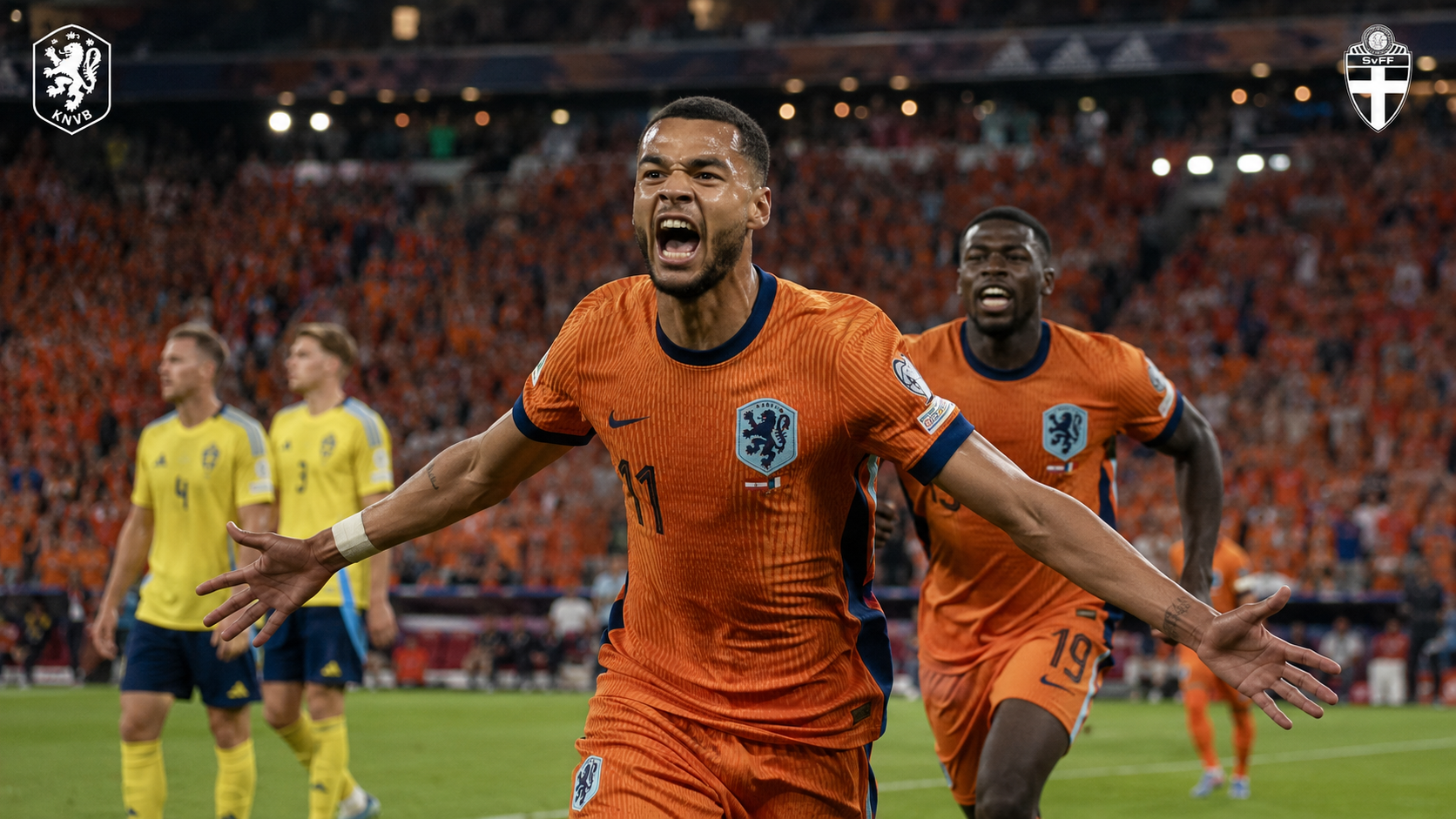
Netherlands 5 - 1 Sweden: The Oranje Crush in Houston
Venue: Houston Stadium, Texas
Group: F
If you missed this late-night clash because of the time zone difference, I strongly suggest you go find the full match replay immediately. What the Netherlands did to Sweden in Houston wasn't just a victory; it was a public execution of Swedish footballing principles.
Coming into this match, the Dutch had looked slightly vulnerable following a 2-2 draw with Japan. Sweden, conversely, was riding high after thrashing Tunisia 5-1. The prevailing narrative suggested a tight, tactical European chess match. Instead, Ronald Koeman’s side opted for shock and awe.
Right from the kickoff, the Netherlands bypassed the midfield completely, opting for direct, aggressive, vertical passes to isolate Brian Brobbey against the Swedish center-backs. It worked to devastating perfection. Brobbey found the back of the net in the 5th minute a goal subjected to a nervous VAR review but ultimately confirmed and followed it up with a second brutal strike in the 17th minute. The sheer physical dominance of Brobbey left the Swedish defense looking like training cones.
By halftime, Sweden looked completely shell-shocked. And then, Cody Gakpo decided to join the party. Gakpo netted twice in rapid succession (47' and 54'), exploiting massive gaps in the Swedish transition defense. Anthony Elanga managed to pull one back for Sweden in the 59th minute, but it was nothing more than a statistical footnote. Sweden’s frustration boiled over, resulting in a string of ugly, cynical fouls. Gabriel Gudmundsson (53'), Yasin Ayari (75'), and Lucas Bergvall (80') all went into the referee's notebook as they chased shadows. Crysencio Summerville added the final insult in the 89th minute, making it 5-1.
From my perspective, this wasn't just about Dutch brilliance; it was a total structural failure from Sweden. They tried to play a high line against arguably the fastest counter-attacking trio in the tournament. It was coaching suicide.
Tactical Specs & Match Reality: Netherlands vs. Sweden
- Verticality vs. Possession: The Dutch didn't dominate possession; they dominated the space. They averaged less than four passes per attacking sequence before registering a shot on target.
- The Brobbey Factor: Brian Brobbey’s hold-up play completely neutralized Sweden's defensive pivot, forcing their fullbacks to tuck inside and leaving the wings entirely exposed for Gakpo to exploit.
- Disciplinary Meltdown: Sweden's three second-half yellow cards highlight a team that lost its emotional baseline when the tactical plan failed.
Direct Comparison:
| Metric | Netherlands | Sweden |
| Attacking Strategy | Direct, high-pace vertical transitions | Slow, methodical buildup out wide |
| Defensive Line | Mid-block, absorbing pressure | Dangerously high line |
| Result & Impact | 5-1 Victory; firmly controlling Group F | Humbling defeat; goal difference destroyed |
Germany 2 - 1 Ivory Coast: Grinding It Out in Toronto
Venue: Toronto Stadium, Canada
Group: E
Everyone fell in love with Germany after they obliterated Curaçao 7-1 in their opening match. The media immediately labeled them the overwhelming tournament favorites. But I have always believed that you don't judge a World Cup contender by how they play when everything is going perfectly; you judge them by how they react when they get punched in the mouth. Today, Ivory Coast delivered that punch.
The atmosphere in Toronto was electric, heavily favoring the underdog Ivorians who brought intense physicality and speed to the pitch. Julian Nagelsmann’s German machine struggled to find its rhythm early on. The fluid, one-touch passing that dismantled Curaçao was constantly interrupted by bruising tackles and rapid Ivorian counter-attacks.
This was not a pretty game of football. It was a chaotic, trench-warfare battle in the middle of the park. Germany eventually secured a 2-1 victory, but they had to bleed for it. The Ivorians pressed aggressively, denying Jamal Musiala and Florian Wirtz the half-spaces they usually exploit.
To me, this 2-1 win is actually far more impressive than the 7-1 blowout. Germany proved they can roll their sleeves up and win ugly. They adapted to a physical game state, managed the tempo in the final fifteen minutes, and professionally killed off the match. With 6 points from two games, Germany has officially booked their ticket to the Round of 32, but Ivory Coast exposed a blueprint on how to rattle them: do not give their midfield pivot a single second to breathe.
Ecuador 0 - 0 Curaçao: A Masterclass in Dark Arts
Venue: Kansas City Stadium, Missouri
Group: E
If you look at the 0-0 scoreline, you might assume this was a boring game. You would be dead wrong. This was one of the most intensely fascinating, frustrating, and downright hilarious matches of the tournament so far.
Let’s set the context: Curaçao was coming off a historic, humiliating 7-1 loss to Germany. They were the laughingstock of the tournament. Ecuador, featuring elite Premier League talent like Moisés Caicedo and Piero Hincapié, was expected to easily put three or four goals past them and secure three crucial points.
Instead, Curaçao’s manager evidently walked into the locker room and told his team to turn the match into a street fight. They didn't just park the bus; they slashed the tires and barricaded the doors. Curaçao disrupted every single phase of Ecuadorian play. They wasted time, they went down for phantom injuries, and they fouled relentlessly.
The referee’s notebook reads like a grocery list of defensive desperation. Ecuador picked up a booking in the 38th minute, but Curaçao took it to another level: yellow cards at 39', 53', 56', 75', and 90+1'. They were physical, they were annoying, and they were utterly brilliant at doing exactly what they needed to do to survive.
Ecuador, frankly, should be embarrassed. For all their possession and perceived technical superiority, they completely lacked a creative spark in the final third. They allowed themselves to be dragged into a choppy, stop-start game and completely lost their composure. This 0-0 draw feels like a massive victory for Curaçao and a potentially fatal failure for Ecuador.
Tactical Specs & Match Reality: Ecuador vs. Curaçao
- The Disruption Metric: Curaçao committed a staggering number of tactical fouls, deliberately taking yellow cards to stop Ecuadorian transitions before they reached the final third.
- Ecuador's Creative Void: Despite controlling the midfield through Caicedo, Ecuador failed to register high-quality chances, resorting to hopeful, low-percentage shots from outside the box.
Direct Comparison:
| Metric | Ecuador | Curaçao |
| Game Plan | Possession-based, wide overloads | Ultra-defensive low block, dark arts |
| Disciplinary Record | 1 Yellow Card | 5 Yellow Cards (Extreme tactical fouling) |
| Tournament Outlook | In severe danger of elimination | Restored pride, secured historic World Cup point |
Live Update: Tunisia 0 - 2 Japan (Half-Time Report)
Venue: Monterrey Stadium, Mexico
Group: F
As I write this, we are currently at halftime in Monterrey, and Japan is absolutely cruising against Tunisia. After a thrilling 2-2 draw with the Netherlands in their opener, the Samurai Blue needed a definitive result today to push for a top spot in Group F. They are delivering on every front.
Tunisia, conversely, is in full-blown crisis mode. After getting hammered 5-1 by Sweden, they made a desperate managerial change, bringing in the legendary Hervé Renard to right the ship. It hasn't worked yet.
Japan came out of the gates like a bullet train. In just the 4th minute, Daichi Kamada found the back of the net (VAR confirmed), completely shattering any defensive confidence Tunisia had managed to build during the week. Japan's 3-4-3 formation is working wonders, overwhelming the Tunisian 5-3-2 setup. Ayase Ueda doubled the lead in the 31st minute, showcasing brilliant positional awareness in the box.
From my viewpoint, Tunisia's midfield is entirely non-existent. They are dropping way too deep, allowing Japan’s wingbacks to operate as unopposed wingers. Unless Renard makes massive tactical changes at halftime, this could easily turn into a 4-0 or 5-0 rout.
What to Watch Tonight: Spain vs. Saudi Arabia
Venue: Atlanta Stadium, Georgia
Time: 9:30 PM IST (12:00 PM Local)
Group: H
The day concludes with a massive Group H clash in Atlanta. Spain is under immense pressure. Following an embarrassing, toothless 0-0 draw against tournament debutants Cabo Verde, the Spanish media is out for blood. They have the possession, they have the pedigree, but they desperately lack a killer instinct in the penalty area.
Saudi Arabia will not make it easy. They are notoriously resilient and well-organized defensively. If Spain tries to simply pass the ball sideways for 90 minutes without penetrating the lines, we could see another massive upset. Keep a close eye on Spain’s starting XI; if they don't start a recognized, traditional number 9 to occupy the Saudi center-backs, it will be another long, frustrating night for La Roja.
We are witnessing the natural sorting process of a World Cup. The pretenders are being exposed, and the resilient teams are finding their footing. The Netherlands proved they have the offensive firepower to scare anyone in the world. Germany showed they have the mental fortitude to survive a dogfight. And Curaçao proved that sometimes, sheer bloody-mindedness and five yellow cards are enough to frustrate elite talent.
As the tournament rolls into the crucial final matchdays of the group stage, keep your eyes on the disciplinary records and the transition speeds. That is where these games are being won and lost. Do not let the possession statistics fool you; in 2026, clinical, ruthless efficiency is king. Stay tuned to the tactical feeds, because this World Cup is only getting crazier.