

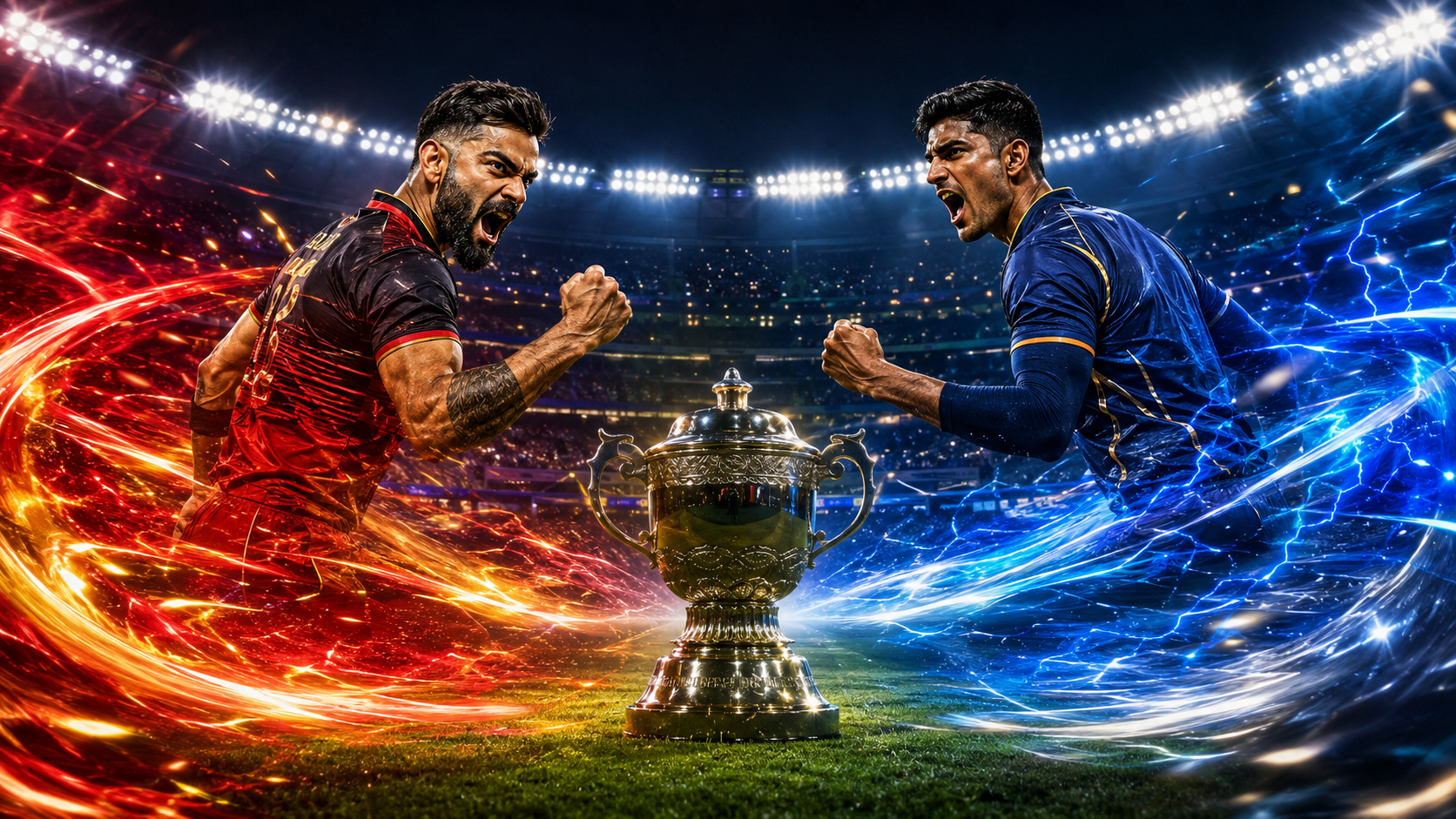
The Narendra Modi Stadium in Ahmedabad is no stranger to noise, but what is about to hit the 132,000-capacity colosseum this Sunday, May 31, 2026, feels entirely different. This isn't just another Indian Premier League final; it is a high-octane cocktail of raw vengeance, legacy-building, and tactical genius. On one side, you have the defending champions, Royal Challengers Bengaluru (RCB), looking to cement a genuine dynasty under the stellar leadership of Rajat Patidar. On the other side stands Shubman Gill’s Gujarat Titans (GT), a team desperate to avenge a humiliating beatdown they suffered just days ago and reclaim their crown on their absolute fortress of a home turf.
If you had told a cricket fan five years ago that an IPL final would feature an RCB side entering as ruthless, cold-blooded defending champions without the captaincy armbands on Virat Kohli—they would have laughed you out of the room. Yet, here we are in 2026. Under Andy Flower’s clinical coaching and Patidar’s ice-cool leadership, RCB has transformed from a meme-generator into a terrifyingly efficient winning machine. But to lift the trophy back-to-back, they have to go through a rejuvenated Gujarat Titans unit that has just chased down a mountainous 214 in Qualifier 2.
The storylines are dripping with drama. The tactical adjustments will be microscopic. Let’s strip away the corporate PR fluff and dive straight into the technical, statistical, and human dynamics that define this massive showdown.
The Dharamshala Carnage: How RCB Left Mental Scars on GT
To understand the sheer psychological weight of this final, we have to look back at Qualifier 1 on May 26 in Dharamshala. It was an absolute bloodbath. On a spectacular mountain night, RCB didn't just win; they desecrated the Gujarat bowling attack, posting an astronomical 254 for 5 the highest team total in the entire history of the IPL playoffs.
The architect of that demolition was none other than RCB skipper Rajat Patidar. Coming in at number three after Venkatesh Iyer’s brief opening blitz, Patidar played an innings that will be talked about for decades. He didn't just hit good balls; he manipulated the fielders like chess pieces, launching 9 towering sixes and 5 boundaries to finish an unbeaten 93 off merely 33 deliveries. His strike rate of 281.82 wasn't just aggressive; it was a structural demolition of GT’s plans.
Ashish Nehra’s face in the GT dugout said it all. Gujarat’s usually disciplined pace unit looked completely toothless. Even an elite campaigner like Kagiso Rabada was taken to the cleaners, conceding 54 runs in his 4 overs despite picking up 2 wickets. When it was time to chase 255, the Titans’ response collapsed before it even started. Sai Sudharsan suffered a bizarre, highly unfortunate hit-wicket dismissal against the pinpoint accuracy of Jacob Duffy for 14, and veteran swing maestro Bhuvneshwar Kumar cleaned up Shubman Gill for just 2 runs.
While Rahul Tewatia waged a brilliant, solitary warfare in the middle overs with a fighting 68 off 43 balls, the match was a foregone conclusion. GT was bundled out for 162 in 19.3 overs, handing RCB a massive 92-run victory and a direct ticket to Ahmedabad. That kind of defeat leaves scars. If Gujarat thinks those scars have healed in five days, they are kidding themselves.
Gill’s Retaliation: The Qualifier 2 Resurgence
Many teams would have folded after a 92-run shellacking. Gujarat didn’t. Instead, they traveled to New Chandigarh for Qualifier 2 on May 29 and reminded the world why they belong in the elite tier of T20 franchises.
Facing a highly spirited Rajasthan Royals (RR) lineup, GT found themselves staring down the barrel of another massive chase. Rajasthan posted a daunting 214 for 6, fueled by an unbelievable, fearless innings from their 15-year-old teenage prodigy Vaibhav Sooryavanshi, who hammered 96 runs and single-handedly dismantled the Titans' powerplay bowling.
Chasing 215 under intense playoff pressure requires clear heads. What followed was a captain’s knock of the highest pedigree. Shubman Gill stood up and delivered a masterclass in modern T20 anchoring and acceleration. Gill smashed a breathtaking 104 off just 53 deliveries, laced with 15 crisp boundaries and 3 sixes. He didn't panic; he simply leaned into his textbook drives and short-arm jabs, completely demoralizing the Rajasthan bowlers.
Alongside him, Sai Sudharsan showed incredible maturity, shrugging off his freakish dismissal from the previous game to score a fluent 58 off 32 balls. Their massive 167-run opening partnership completely broke the back of the chase, allowing GT to gallop home with 7 wickets and 8 balls to spare.
This victory completely alters the narrative heading into Sunday. RCB might have the rest and the psychological upper hand from Dharamshala, but GT has the momentum of a successful, high-pressure 215-run chase under their belts.
The Ultimate Irony: The Great Roster Swap of 2026
One of the most fascinating aspects of this final and something that makes it feel uniquely human is the bizarre alignment of the team sheets. The recent mega-auctions and trade windows have created a reality that sounds like alternate-universe fiction.
Consider this: Mohammed Siraj, the man who wore his heart on his sleeve for RCB for years, who breathed fire in the red-and-gold jersey, is now leading the bowling attack for the Gujarat Titans. On the flip side, Bhuvneshwar Kumar, the legendary swing king long associated with Sunrisers, is now wearing the RCB jersey, holding the new ball, and swinging it under lights alongside the lethal Josh Hazlewood.
Watching Siraj steam in at the Narendra Modi Stadium to bowl at Virat Kohli in an IPL final is the kind of theatre scriptwriters can't replicate. Siraj knows Kohli’s weaknesses better than anyone; he has bowled thousands of deliveries to him in the nets. Kohli, conversely, knows exactly when Siraj is trying to wobble the seam or push the ball wide. This internal familiarity adds an extra layer of tension to the first six overs of the final.
Ground Specs & Tactical Matrix: Narendra Modi Stadium
Ahmedabad is a completely different beast compared to the scenic, high-altitude, tiny-boundary venue of Dharamshala. In Dharamshala, the ball flies through the thin air, and mishits clear the boundary easily. In Ahmedabad, you have to earn your sixes. The square boundaries are massive, the straight boundaries require real meat behind the blade, and the dual-pitch nature (red soil vs black soil) keeps captains guessing until the toss.
Here is a point-form breakdown of the venue specifications and tactical factors for Sunday's final:
- Boundary Dimensions: Square boundaries average around 68-72 meters, while the straight boundaries stretch up to a massive 75-77 meters. Running between the wickets will be just as crucial as hitting boundaries.
- The Pitch Factor: Expect a hard, rolled surface that offers initial true bounce for the pacers, but opens up for spinners in the middle overs. If a red-soil surface is used, spin will play a massive role; black soil will favor heavy-ball hit-the-deck pacers.
- The Dew Impact: Sitting right by the Sabarmati River, evening dew is a massive structural factor in Ahmedabad late in May. The ball becomes greasy in the second innings, making chasing significantly easier and rendering finger spinners nearly ineffective.
- The Powerplay Blueprint: With Bhuvneshwar Kumar and Jacob Duffy operating for RCB, and Kagiso Rabada and Prasidh Krishna for GT, the first 6 overs will be a battle of attrition rather than an outright slogfest.
Head-to-Head Comparison: The Finalists Stats Matrix
To get a clearer picture of how these two heavyweights stack up statistically over the course of this tournament leading into the grand finale, let's look at the hard metrics:
| Performance Metric | Royal Challengers Bengaluru (RCB) | Gujarat Titans (GT) |
| Captain | Rajat Patidar | Shubman Gill |
| Head Coach | Andy Flower | Ashish Nehra |
| Playoff Road | Won Qualifier 1 (Direct Entry) | Lost Q1, Won Qualifier 2 |
| Highest Score (2026) | 254/5 vs GT (Dharamshala) | 231/6 vs SRH (Lucknow) |
| Powerplay Slog Rate | 9.45 runs/over | 8.90 runs/over |
| Death Overs Economy | 10.15 runs/over | 9.80 runs/over |
| Primary Spin Weapon | Krunal Pandya / Spin options | Rashid Khan / Sai Kishore |
| New Ball Ace | Bhuvneshwar Kumar | Kagiso Rabada / M. Siraj |
Key Tactical Matchups That Will Decide the Title
When you look past the team names and focus on the individual battles, this final will be won or lost in three specific tactical windows.
1. Shubman Gill vs Bhuvneshwar Kumar & Josh Hazlewood
Gill is in pristine form, as evidenced by his majestic 104 against Rajasthan. However, his biggest kryptonite early in an innings is elite, high-class swing and seam movement that targets the fifth-stump line. In Qualifier 1, Bhuvneshwar Kumar set him up beautifully with two out-swingers before nipping one back to clean him up for 2. If Bhuvi and Hazlewood can dismiss Gill inside the first 4 overs, Gujarat’s middle order which lacks a bit of structural depth beyond Sai Sudharsan and Glenn Phillips could easily buckle under pressure.
2. Rajat Patidar vs Rashid Khan
Patidar is arguably the finest player of spin in Indian cricket today. His ability to pick the length early and plant his front foot to launch spinners over mid-wicket is second to none. His 93* in Dharamshala showed he has no fear. But Rashid Khan in an Ahmedabad final is a completely different monster. Rashid thrives on squeeze-pressure. If Patidar tries to force Rashid out of the attack early, it could result in a catastrophic breakthrough for GT. This is a pure battle of wits: Patidar’s reach vs Rashid’s quick-arm skidders.
3. The Death-Overs Chess Match: Tewatia vs RCB’s Variation Bowlers
Rahul Tewatia is the ultimate cult hero of the IPL. He loves the big stage, and his 68 in Qualifier 1 proved he is the only GT batsman who didn't let RCB's bowlers dictate terms. In the final overs, RCB will likely rely on Rasikh Salam and Jacob Duffy to bowl wide yorkers and slower-ball bouncers. Tewatia excels at pre-meditating his sweeps and carves over short third-man. If RCB misses their execution by even a few inches, Tewatia will punish them severely.
Why This Isn't Just Another Match
Let's drop the neutral analyst mask for a second. From where I sit, this final is a legacy-defining crossroad for Indian cricket's new generation of leadership.
For the longest time, the narrative around RCB was always about individual brilliance masking systemic franchise failures. They had the biggest stars, the loudest fans, but an empty trophy cabinet. Winning the title in 2025 broke the curse, but doing it again in 2026 under Rajat Patidar’s captaincy would completely rewrite the franchise’s DNA. It would prove that the "RCB Way" is now rooted in clinical, analytical, unflappable execution. Patidar has shown immense tactical maturity; he doesn’t panic when a bowler gets hit for consecutive sixes, and his field placements are surprisingly proactive.
On the flip side, Shubman Gill is fighting for his own identity as a leader. It is easy to captain a star-studded team when everything is going perfectly, but leading a side back from a 92-run hammering to win a title in front of 132,000 home fans? That is how legendary captains are made. Gill’s batting in Qualifier 2 showed a man who has completely accepted the burden of responsibility. He didn't play a single flashy, reckless shot until the game was firmly in GT’s grasp.
If I am forced to put my money on a winner, the tactical advantage leans slightly toward RCB because of their bowling variety. Having Bhuvneshwar’s swing, Hazlewood’s relentless tight lines, and Rasikh Salam’s modern variations gives Patidar a defensive tool for almost every scenario. GT relies very heavily on their top two (Gill and Sudharsan) to lay a massive foundation. If RCB’s new-ball pair can crack open that top order early under the Ahmedabad lights, the Titans might find themselves chasing shadows once again.
However, write off Gujarat at your own peril. They are playing in their own backyard, they have Ashish Nehra’s unpredictable tactical brain in the dugout, and they have Rashid Khan. In a single-game knockout, a moment of madness or a brief spell of genius can turn everything on its head.
One thing is absolute certain: when that first ball is bowled at 7:30 PM IST on Sunday, tactical charts won't matter. It will be down to eleven men managing their heart rates under the deafening roar of over a hundred thousand screaming fans. Get your popcorn ready this one is going down in the history books.