

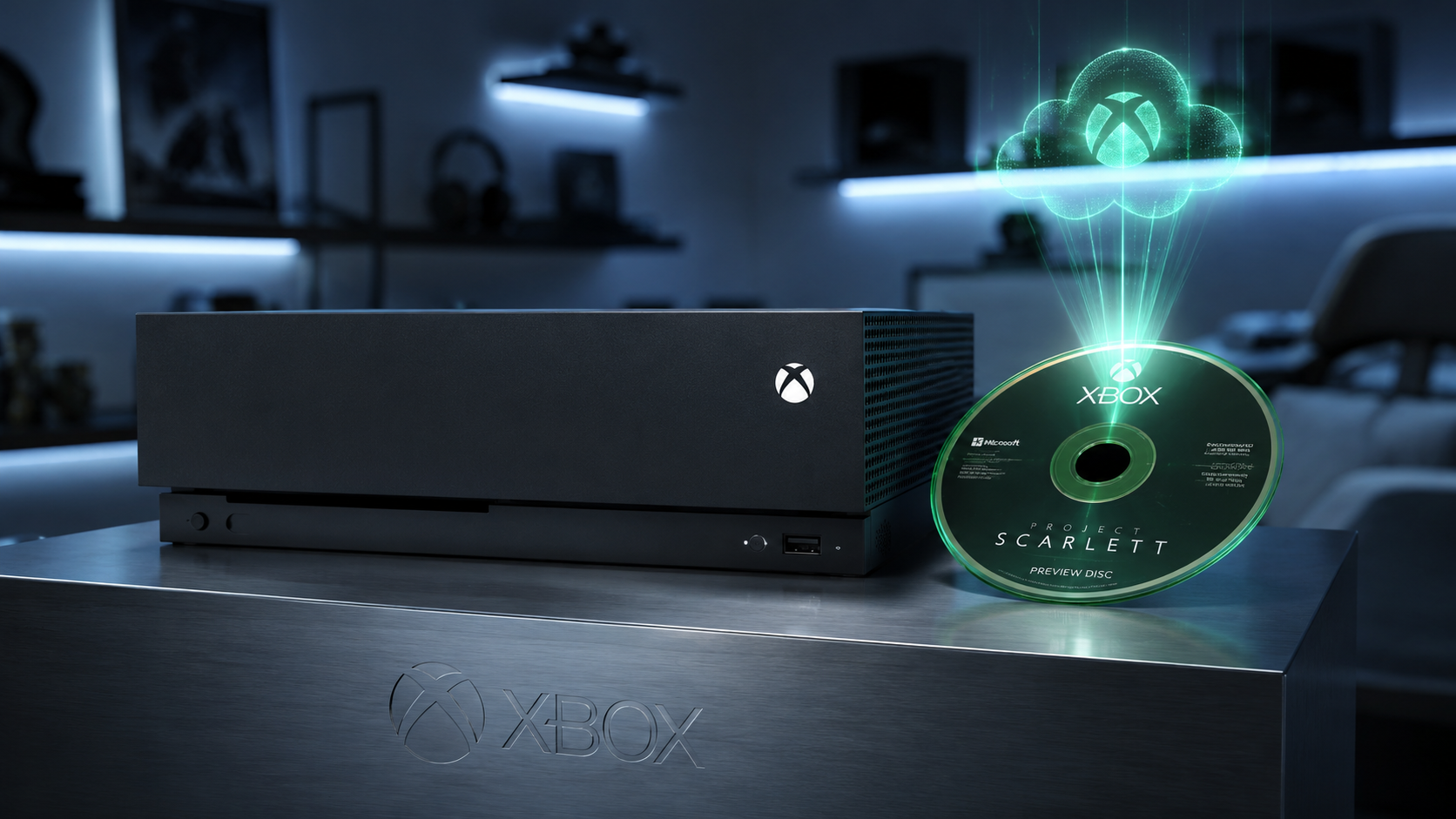
We are standing at the edge of a massive cliff in the video game industry, and the drop below is an all-digital future. For years, collectors and physical media purists have watched with a growing sense of dread as optical drives vanished from PC cases, slimmed down on current-gen consoles, and became entirely optional add-ons. But in July 2026, an internal leak from Microsoft fundamentally shifted the conversation.
Xbox is currently testing a new feature internally codenamed both "Positron" and "Disc2Digital" that allows players to convert their physical Xbox Series X and Xbox One game discs into permanent digital entitlements.
As someone who still has shelves lined with plastic game cases spanning four generations of consoles, my immediate reaction was a mix of skepticism and relief. The reality of modern gaming is that a disc is rarely a complete game anymore; it is a glorified physical installation key that requires massive day-one patches. But Microsoft’s new program isn’t about pretending physical media is thriving. It is a calculated, brilliant bridge to whatever comes next.
If you have been following the rumors surrounding the next-generation Xbox console, dubbed "Project Helix," you know a disc drive is highly unlikely to make the cut. So, how do you convince millions of players with massive physical libraries to buy a digital-only box? You turn their discs into digital licenses. Let's break down exactly how this leaked program works, why it succeeds where the disastrous 2013 Xbox One launch failed, and what it means for your game collection.
The Ghost of 2013: Getting It Right the Second Time
To understand why this is such a massive deal, we have to travel back to the infamous 2013 Xbox One reveal. Back then, Microsoft pitched an incredibly similar concept: install your disc once, tie it to your account, and never put the disc in the console again. The execution was an unmitigated disaster. Microsoft implemented draconian DRM checks, complicated trade-in policies, and a requirement to connect to the internet every 24 hours. The backlash was so severe that it handed the entire console generation to Sony's PlayStation 4 on a silver platter.
So, what makes the 2026 "Disc2Digital" program different? Simple: it is entirely optional, and it respects the physical asset.
According to reports from Windows Central and The Verge, Microsoft has learned its lesson. The new system does not kill the used game market. Instead, it modernizes it. We are finally seeing a consumer-friendly approach to digital conversion that does not treat the player like a potential pirate. It treats the disc as a physical receipt that can be traded, sold, or borrowed but with all the modern conveniences of a digital library.
How the Xbox Positron (Disc2Digital) Program Actually Works
The mechanics of the Disc2Digital program are surprisingly straightforward, completely avoiding the nightmare scenarios of mail-in programs or one-time digital redemption codes printed on slips of paper.
When you insert an eligible Xbox Series X or Xbox One disc into your console, you install and launch the game while signed into your Microsoft account. In the background, the console authenticates the specific manufacturing footprint of that individual disc and grants your account a digital entitlement.
Once that license is tied to your account, you no longer need the disc in the drive to play the game on that console. However—and this is the absolute crucial part—that digital license is dynamically tethered to the physical disc itself. Microsoft prevents infinite game sharing through a clever handover system. If you take that same disc, hand it to a friend, and they put it into their Xbox, the digital entitlement automatically strips from your account and moves to theirs. The same applies if you trade the game in at a local retailer.
The physical disc remains the master key. It never becomes a useless "bricked" piece of plastic, and you are never locked out of selling your property.
Verified Specifications and Features of Disc2Digital
Based on the latest code spotted in the Xbox PC app and internal testing leaks from July 2026, here are the hard facts about the program:
- Supported Platforms: Xbox One and Xbox Series X game discs.
- Unsupported Platforms: Original Xbox and Xbox 360 discs will not work under this program.
- Account Mobility: The digital license follows the disc. Swapping the disc to a different profile automatically revokes the previous digital access and grants it to the new user.
- Xbox Play Anywhere Integration: If the converted physical game supports Xbox Play Anywhere, your account immediately gains access to the digital PC version. You can literally buy a used disc at GameStop, put it in your Xbox, and then go play the PC version on your gaming rig without the disc.
- Cloud Gaming Support: Game Pass subscribers can stream their newly digitized disc games to mobile devices, smart TVs, or handhelds via Xbox Cloud Gaming.
- Hardware Requirement: An Xbox console with an optical disc drive is required to initiate the initial verification handshake.
The Ultimate Benefit: Cross-Platform Continuity
For me, the absolute killer feature of this program isn't just the convenience of not getting off the couch to swap discs. It is the platform continuity.
Let’s say you own a physical copy of Cyberpunk 2077 or Starfield. By using the Disc2Digital program, that game enters your modern Microsoft ecosystem. Suddenly, a piece of plastic sitting on your shelf is accessible on your Windows handheld gaming PC through Xbox Play Anywhere. You can boot up your smartphone on a train and stream the game via Xbox Cloud Gaming.
Microsoft is fundamentally altering the value proposition of physical games. A disc is no longer just a medium that carries software for a single piece of hardware under your television. It is an authentication artifact that unlocks the game across the entire Microsoft ecosystem.
The PlayStation Contrast: A Diverging Industry
You cannot analyze Microsoft’s strategy without looking at their primary competitor. Recent supply chain leaks indicate that Sony is planning to completely halt the production of physical game discs by January 2028, aligning perfectly with the expected launch window of a digital-only PlayStation 6.
While Sony is seemingly preparing to force a hard cut-off, leaving players with massive physical PS4 and PS5 libraries entirely reliant on keeping old hardware alive or buying expensive external disc drives, Microsoft is building a software bridge.
Comparison: Microsoft's Disc2Digital vs. Sony's All-Digital Push
| Strategy Aspect | Xbox Disc2Digital (Positron) | Sony PlayStation (Expected 2028 Strategy) |
| Physical Library Path | Converts physical discs into digital account licenses. | Discs remain tied strictly to hardware with optical drives. |
| Hardware Future | Readies players for disc-less consoles (Project Helix). | Likely requires external disc drive add-ons for backward compatibility. |
| Used Game Market | Preserved. License moves dynamically with the physical disc. | Severely threatened if disc production fully stops in 2028. |
| PC Cross-Play | Yes. Converts eligible discs to PC licenses via Play Anywhere. | No native physical-to-PC license conversion exists. |
| Cloud Streaming | Converted games can be streamed via Xbox Cloud Gaming. | Physical games cannot be streamed via PlayStation Plus Premium. |
Looking at that table, the optics for Xbox are incredibly strong. Microsoft is offering a consumer-friendly off-ramp from physical media. Sony, based on current reporting, looks like they are going to push consumers off the boat and hope they can swim.
Project Helix: Preparing for the Disc-Less Reality
We need to address why this feature is entering internal testing right now in the summer of 2026. This is not a random quality-of-life update. It is foundational groundwork for "Project Helix," the heavily rumored next-generation Xbox console expected in 2027.
Multiple reliable industry insiders have stated that the next Xbox hardware will drop the disc drive entirely. The economics of manufacturing optical drives, combined with the fact that digital sales now account for the vast majority of software revenue, make the hardware disc drive an obsolete expense for platform holders.
If Microsoft ships a high-powered, disc-less console, they face an immediate backlash from the millions of core fans who have invested heavily in backward compatibility. How do you play your massive stack of Xbox Series X discs on Project Helix?
The Disc2Digital program solves this. If Microsoft rolls this feature out widely over the next year, players can spend the remaining lifespan of the Xbox Series X converting their physical libraries into digital licenses. When Project Helix launches, your entire collection is already waiting for you in the cloud, tied to your account. You upgrade your hardware, log in, and hit download. It is a masterstroke in ecosystem retention.
The Flaws in the System: The Left Behind Generations
While I am overwhelmingly positive about the Positron program, I have to point out the glaring blind spots. The most disappointing revelation from the July 2026 leaks is the lack of support for original Xbox and Xbox 360 discs.
Microsoft built massive goodwill over the last decade with its industry-leading backward compatibility program. Being able to pop a 2003 copy of Crimson Skies: High Road to Revenge into a modern console and play it upscale was a massive selling point. The fact that these legacy discs are excluded from the digital conversion process hurts.
I understand the technical hurdles. As internal testers noted, whether a disc works "all depends on how and when the disc was manufactured." Modern Xbox One and Series X discs have unique identification codes embedded in their manufacturing process, allowing the console to differentiate between two identical copies of Halo Infinite. A standard DVD from 2005 likely lacks that unique serialized identifier. If Microsoft allowed 360 discs to be converted, a single physical copy of Gears of War could be passed around a city, generating thousands of free digital licenses with no way to revoke them.
Furthermore, we do not yet know how the program handles delisted games. Titles like the classic Forza Horizon games, which were removed from digital storefronts due to expiring car and music licenses, remain a massive question mark. Can a physical disc generate a digital license for a game that legally cannot be sold digitally anymore? These are the complex licensing landmines Microsoft’s legal team is likely navigating right now.
The Evolution of Game Ownership
As we stare down the barrel of a fully digital gaming industry, the Xbox Disc2Digital program feels like the only logical compromise. It acknowledges the inevitable death of the optical drive without punishing the consumer for trusting physical media over the last decade.
For the first time, a console manufacturer has figured out how to extract the benefits of a physical disc resale value, lending, and physical ownership and combine them with the frictionless convenience of digital gaming.
I do not expect physical games to survive the next decade. The manufacturing costs, the logistics, and the environmental footprint make printed plastic an endangered species. But if Microsoft successfully rolls out this program, they ensure that the legacy of those physical discs lives on in our digital libraries. The disc might eventually disappear from our living rooms, but thanks to this program, our hard-earned game collections won't disappear with it.